The Core Choice for Mobile Sanitation Solutions
With the normalization of scenarios such as outdoor events, corporate celebrations, construction site operations, and emergency shelters, mobile toilet trailers have become key equipment for addressing temporary sanitation needs, leveraging their core advantages of high mobility and autonomy. Compared to traditional fixed toilets, mobile toilet trailers require no complex infrastructure, can be quickly deployed, and offer flexible functional configurations tailored to scenario-specific requirements, ensuring both user experience and compliance with hygiene regulations.
The current market offers a diverse range of mobile toilet trailers with significant price variations, covering different demand levels from basic construction models to high-end event models. This guide will provide a comprehensive decision-making framework from core dimensions including product understanding, scenario-based selection, pricing references, purchase/rental channels, and usage maintenance, helping you accurately match your needs and avoid pitfalls in purchasing or renting.
Core Reading Navigation: Comprehensive Understanding of Mobile Toilet Trailer Types and Configurations → Scenario-Based Precision Selection Skills → 2025 Latest Pricing and Cost Control Methods → Reliable Purchase/Rental Channel Recommendations → Professional Usage and Maintenance Guide → Frequently Asked Questions (FAQs)
Comprehensive Understanding of Mobile Toilet Trailers – Types, Configurations, and Core Advantages
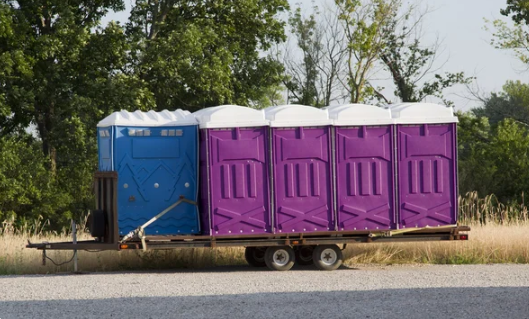
The core value of mobile toilet trailers lies in “scenario adaptability” and “operational convenience.” Their product classification and configuration design are centered around the core needs of different scenarios. Understanding the characteristics of various products is the foundation for precise selection.
1. Mainstream Product Types and Suitable Scenarios
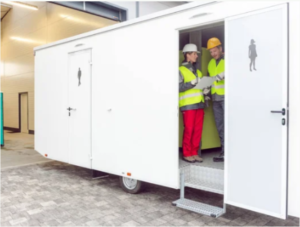
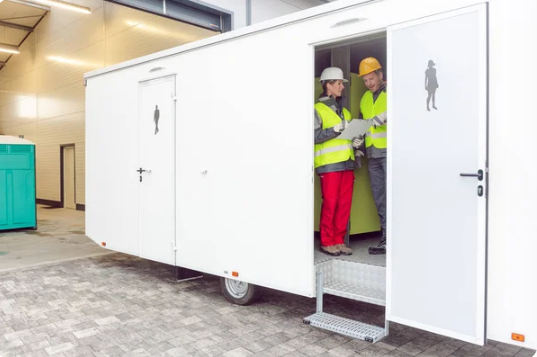
- Luxury Mobile Toilet Trailers: Focus on high-end experiences, with core configurations including heating and cooling air conditioning, automatic sensor hand sinks, integrated stainless steel toilets, LED occupancy indicators, vanity mirrors, and coat hooks. The exterior finish can be 304 stainless steel brushed panels or aluminum-plastic panels, with corrosion-resistant material walls and roofs. Some high-end models also include shower rooms. Suitable Scenarios: Weddings, corporate celebrations, VIP receptions, large-scale exhibitions, and other events requiring high user experience. For example, Luyuan Environmental Sanitation’s new 8-stall luxury model, with dimensions of 6800*2400*2900mm, can meet the water replenishment and sewage cleaning cycle for 2000 person-times, fully adapting to the needs of large-scale high-end events.
- Construction/Industrial Mobile Toilet Trailers: Core advantages lie in durability and ease of maintenance. They adopt galvanized steel frames, non-slip PVC or 304 stainless steel floors, and are equipped with large-capacity septic tanks and water tanks, capable of adapting to harsh construction site environments. Some models feature a dual-water tank design for clear division of labor and reduced cleaning frequency. Suitable Scenarios: Construction sites, mining operations, outdoor construction areas, and other long-term high-frequency use scenarios. It is recommended to choose models with anti-corrosion coatings to extend outdoor service life.
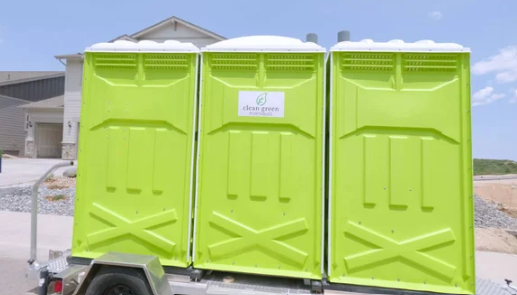
- Standard Mobile Toilet Trailestandard mobile toiletrs: Focus on cost-effectiveness, with basic configurations including ordinary toilets, simple hand sinks, and forced ventilation systems. They have a compact size for convenient transportation. For example, Luyuan’s PT-280 standard model, with specifications of 1000*1000*2350mm, can be loaded 8 units fully assembled or 20 units disassembled in a 4.2m truck, significantly reducing logistics costs. Suitable Scenarios: Small outdoor events, community temporary needs, short-term events, and other scenarios with moderate traffic. Under 100-person traffic, it can achieve a 5-day cleaning cycle with low maintenance costs.
- Barrier-Free Adaptive Mobile Toilet Trailers: Strictly comply with the “Barrier-Free Design Specifications,” adopting widened doorways and barrier-free access to ensure smooth entry and exit for wheelchairs. Support handrails are installed on both sides of the toilet and next to the hand sink, with the hand sink height adapted for special groups. At the same time, lighting and ventilation designs are enhanced. Suitable Scenarios: Municipal parks, public events, large-scale exhibitions, and other public scenarios that need to accommodate special groups.
2. Interpretation of Core Configurations and Key Parameters
When selecting a mobile toilet trailer, core configurations and parameters directly determine the usage effect and durability. The following three key dimensions should be focused on:
- Size and Capacity: Length ranges from 3.5m to 10m, width from 1.8m to 2.2m, and the number of stalls ranges from 2 to 8. Water tank capacity is 500L to 3500L, with septic tank capacity matching the water tank, covering 10 to 200 users. Key Reference Standard: 1 stall is recommended for 50-80 users for short-term use, and the configuration should be halved for long-term use. For example, a 3-stall standard model (length about 4.5m) is suitable for short-term events with 150-240 users.
- Material and Durability: Mainstream materials include HDPE plastic (lightweight and impact-resistant, suitable for short-term use), fiberglass (high-end and durable, strong corrosion resistance), and galvanized steel (suitable for construction scenarios, wear-resistant). For long-term outdoor use, models with UV protection should be selected to avoid aging due to sun exposure; in coastal or humid areas, 304 stainless steel accessories are preferred to prevent rust.
- Functional Configuration: Basic functions must include a ventilation system (core for odor prevention), independent stalls and door locks; advanced functions can include hot water systems, solar power supply (essential for scenarios without external water and electricity), automatic flushing, LED lighting, etc. For construction scenarios, it is recommended to add non-slip floors and large-capacity septic tanks; for high-end events, air conditioning and sensor-based accessories can be upgraded.
3. Core Advantages of Mobile Toilet Trailers
Compared to traditional temporary toilets, mobile toilet trailers have four core advantages: ① High Mobility: Trailer-mounted design allows transportation without disassembly, on-site deployment only requires flat ground, and it can be put into use within 1-2 hours; ② High Autonomy: Equipped with its own water tank and septic tank, no need for external water and electricity, suitable for remote scenarios without infrastructure; ③ Superior Hygiene: Complete ventilation system can effectively avoid odor accumulation, and materials are easy to clean, reducing bacterial growth; ④ Flexible Customization: The number of stalls, functional configurations, and appearance design can be adjusted according to scenario needs, adapting to different levels of demand.
Scenario-Based Selection Guide – Accurately Matching Your Needs
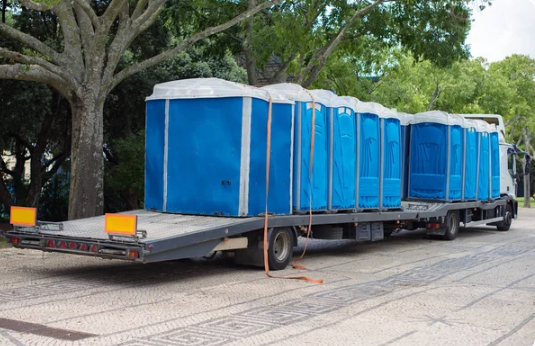
The core logic of selection is “scenario adaptation + demand priority.” Different scenarios have significant differences in the number of users, duration, environmental conditions, and experience requirements. It is necessary to selectively choose product types and configurations to avoid functional redundancy or insufficiency.
1. Precision Selection by Scenario Type
- High-End Events (Weddings, Corporate Celebrations, VIP Receptions): Prioritize luxury mobile toilet trailers, focusing on interior texture, privacy, and comfortable configurations. Recommended Configurations: 2-3 stall models with heating and cooling air conditioning, automatic sensor hand sinks, LED occupancy indicators, and vanity mirrors; choose 304 stainless steel or fiberglass materials to enhance texture. Configuration Standard: 1 unit per 50-80 guests, with 10%-20% redundancy required for events lasting more than 4 hours. For example, a 200-person corporate celebration is recommended to configure 4 units of 2-stall luxury models to ensure smooth usage.
- Outdoor Festivals (Music Festivals, Large-Scale Events, Exhibitions): Choose standard or expanded models, focusing on large capacity and quick cleaning design. Recommended Configurations: Multi-stall (4-8 stalls), large-capacity water tanks and septic tanks, forced ventilation systems, paired with 1-2 barrier-free adaptive models. Configuration Standard: 1 multi-stall unit per 100-150 users. For example, a 500-person music festival is recommended to configure 4 units of 6-stall standard models, with dedicated personnel responsible for real-time cleaning and consumable replenishment.
- Construction Sites (Long-Term Construction, Mining Projects): Select construction/industrial models, focusing on durability and ease of maintenance. Recommended Configurations: Galvanized steel frames, non-slip 304 stainless steel floors, large-capacity septic tanks (≥1500L), simple hand sinks, no complex electronic accessories (to reduce failure probability). Configuration Standard: 1 basic unit per 20-30 workers. For long-term on-site projects, it is recommended to choose 2 units for rotation to ensure a reasonable cleaning cycle and improve worker usage experience.
- Temporary Shelters/Remote Areas (Emergency Disaster Relief, Field Operations): Choose models with high autonomy, focusing on adaptability to scenarios without external water and electricity and hygiene protection. Recommended Configurations: Solar power supply, extra-large water tanks (≥2000L) and septic tanks, enhanced ventilation systems, and corrosion-resistant materials. Configuration Standard: 1 4-stall model per 50 users, equipped with backup water buckets and generators to cope with sudden water and electricity needs; at the same time, choose easy-to-clean materials to reduce maintenance pressure.
- Community Temporary Needs/Small Events: Select standard models, focusing on cost-effectiveness and convenience. Recommended Configurations: 2-3 stalls, basic ventilation and hand sinks, no complex configurations. Configuration Standard: 1 unit per 80-100 users, with appropriately increased per capita ratio for short-term use (1-3 days). For example, a 100-person community event can be satisfied with 1 unit of 3-stall standard model.
2. Core Considerations for Selection
- Number of Users and Duration: For short-term events (1-3 days), calculate based on peak number of users, such as weekend events configured according to the maximum daily traffic; for long-term use (more than 1 month), reserve redundant capacity, and consider the cleaning cycle, it is recommended to add 1-2 backup units.
- Site Conditions: Confirm whether the site has vehicle access (trailer transportation requires ≥4.5m width), whether it is flat (to avoid equipment tilting), and whether external water and electricity can be connected (affecting the choice of autonomous configuration); for high-temperature areas, choose models with air conditioning or strong ventilation, for low-temperature areas, do a good job in water pipe insulation (to avoid freezing and cracking), and for coastal areas, prioritize corrosion-resistant materials.
- Compliance Requirements: Public scenarios need to comply with local hygiene standards, and some areas mandatorily require barrier-free facilities and ventilation systems; construction scenarios need to comply with construction site hygiene management regulations, and waste disposal must be connected with compliant institutions to avoid environmental risks.
- Budget Range: Clarify the purchase/rental budget and balance configuration and cost. For example, construction scenarios do not need to pursue high-end functions such as air conditioning, which can save more than 30% of costs; if the budget for high-end events is limited, you can choose basic luxury models, retaining only core comfortable configurations (air conditioning, sensor hand sinks) and abandoning unnecessary decorations.
2025 Mobile Toilet Trailer Pricing Reference and Cost Control
In 2025, the market price of mobile toilet trailers is greatly affected by materials, configurations, brands, and purchase volume. Different types of products have clear price ranges, and the cost difference between rental and purchase is significant. It is necessary to reasonably choose the cooperation mode according to the usage duration.
1. Purchase Price Reference (By Type)
- Standard Mobile Toilet Trailers: Price range: 35,000 – 60,000 RMB/unit, basic configurations (2-3 stalls, ordinary toilets, hand sinks, ventilation systems), mainly made of HDPE plastic or ordinary steel. For example, Luyuan’s PT-280 standard model with 2 stalls is about 38,000 RMB, suitable for small events and community needs.
- Luxury Mobile Toilet Trailers: Price range: 60,000 – 120,000 RMB/unit, configurations (2-8 stalls, air conditioning, sensor hand sinks, stainless steel toilets, high-end interiors), made of fiberglass or 304 stainless steel. For example, Luyuan’s 8-stall luxury model with air conditioning and automatic flushing functions is about 100,000 RMB, suitable for large-scale high-end events.
- Construction/Industrial Mobile Toilet Trailers: Price range: 45,000 – 80,000 RMB/unit, configurations (2-4 stalls, durable frames, large-capacity septic tanks, non-slip floors), made of galvanized steel and 304 stainless steel. Some manufacturers offer a 5% discount for bulk purchases (≥5 units), with a unit price as low as 42,000 RMB/unit.
- Barrier-Free Adaptive Mobile Toilet Trailers: Price range: 50,000 – 90,000 RMB/unit, adding barrier-free configurations on the basis of corresponding types, 15%-20% higher than ordinary models of the same level. For example, a 3-stall standard barrier-free model is about 52,000 RMB.
- Used/Refurbished Models: Price range: 18,000 – 45,000 RMB/unit. It is necessary to focus on checking the water tank tightness, frame corrosion, and hygiene system condition. Priority should be given to products with a service life ≤2 years and formal refurbishment reports, suitable for short-term projects with limited budgets.
2. Rental Price Reference (By Duration and Type)
Rental is suitable for short-term use scenarios (≤6 months), with lower costs than purchase, and no need to bear maintenance and subsequent disposal costs. The mainstream rental mode includes “basic rental + value-added services” with transparent fees.
- Short-Term Rental (1-7 Days): Standard models: 150-300 RMB/day, luxury models: 350-600 RMB/day, construction models: 200-400 RMB/day, barrier-free models: 250-450 RMB/day. Fees usually include transportation, installation, basic cleaning, and recycling. Some suppliers charge an additional 10%-20% transportation fee for remote areas. For example, renting 4 units of 6-stall standard models for a 3-day music festival, the total cost is about 3,600 RMB (300 RMB/day/unit × 4 units × 3 days).
- Long-Term Rental (More Than 1 Month): Standard models: 3,000-5,000 RMB/month, luxury models: 6,000-10,000 RMB/month, construction models: 4,000-6,500 RMB/month. Discounts are available for long-term rentals, with a 10%-15% discount for rental durations exceeding 3 months. Some suppliers provide free regular cleaning and maintenance packages (1-2 times a week) to reduce usage costs.
3. Cost Control Skills
- Configure on Demand, Reject Redundancy: Construction scenarios do not need to be equipped with high-end functions such as air conditioning and sensor accessories, which can save more than 30% of costs; small events choose standard models to avoid excessive pursuit of luxury configurations.
- Enjoy Discounts for Bulk Purchase/Rental: When booking multiple units at the same time, suppliers usually offer 5%-15% discounts. For example, purchasing 10 construction models, the unit price can be reduced from 45,000 RMB to 42,000 RMB, saving a total of 30,000 RMB.
- Compare Multiple Quotes, Prefer Cost-Effective Channels: Online B2B platforms (Alibaba, Made-in-China) have transparent prices, suitable for bulk purchases; local suppliers have fast response and more convenient rental services. It is recommended to obtain 3-5 quotes for comparison, considering both price and service.
- Reasonably Choose the Cooperation Mode: For usage duration ≤6 months, rental is preferred to avoid idle costs after purchase; for usage duration ≥6 months, purchasing used or basic models is preferred, with a total cost 40% lower than rental.
- Control Maintenance Costs: For long-term use, you can sign a maintenance package with the supplier, which saves 20%-30% compared to hiring personnel for maintenance alone; for short-term events, choose rental packages that include cleaning services to avoid additional expenses.
Purchase/Rental Channel Recommendations and Supplier Selection Skills
Channel selection directly affects product quality, price, and subsequent services. Priority should be given to formal and qualified channels, and appropriate channels should be selected according to their own needs (purchase/rental, bulk/single unit, local/cross-border) to avoid the risks of counterfeiting and lack of services.
1. Core Standards for Supplier Selection
- Qualifications and Reputation: Prioritize suppliers with business licenses, hygiene compliance certifications, and ISO quality system certifications; refer to user reviews, focusing on product quality, after-sales response speed, and service attitude. Online platforms can check ratings (priority for ≥4.8 points), and local suppliers can consult peer recommendations.
- Service Scope: For purchases, confirm whether transportation, installation, and commissioning services are included; for rentals, confirm whether “transportation-installation-cleaning-recycling” one-stop services are included to avoid additional charges later. For long-term use, it is recommended to choose suppliers that provide regular maintenance services.
- Customization Capability: According to scenario needs, confirm whether the supplier can adjust the number of stalls, functional configurations (such as adding air conditioning, expanding water tanks), and appearance design; the customization cycle should be ≤15 days to avoid affecting the usage progress.
- After-Sales Guarantee: For purchased products, confirm the warranty period (usually 1 year, core components such as water tanks and frames have a 2-year warranty), and clarify the fault handling time limit (local ≤24 hours, remote ≤48 hours); for rentals, clarify the division of fault handling responsibilities to ensure timely maintenance or replacement when equipment malfunctions.
Mobile Toilet Trailer Usage and Maintenance Guide
Correct usage and maintenance can not only improve the user experience but also extend the service life of the equipment and reduce the probability of failures. It is necessary to formulate targeted maintenance plans according to the usage scenarios to ensure the stable operation of the equipment.
1. Pre-Use Preparation
- Site Planning: Choose flat and solid ground to avoid low-lying waterlogged areas; reserve transportation channels (≥4.5m width) and user access space (≥1.5m); ensure good ventilation of the site and keep away from catering areas to reduce odor impact.
- Equipment Inspection: Fully check the water tank level (needs to be full), septic tank tightness (to avoid water leakage), whether the door locks and ventilation system are normal; for equipment connected to external water and electricity, confirm that the lines and pipelines are firmly connected without leakage or electric shock risks; test whether electrical functions such as air conditioning and sensor accessories are normal.
- Signage Setting: Post clear gender division signs, barrier-free signs, and usage instructions; place consumables such as hand sanitizer, toilet paper, and trash cans; for high-end events, guide signs can be added to improve the user experience.
2. Daily Maintenance Points
- Cleaning Frequency: For short-term events, clean at least once a day, focusing on cleaning toilets, hand sinks, and floors, and replacing trash bags; for long-term use, clean twice a day (morning and evening) and disinfect regularly (2-3 times a week); for large-scale events, it is recommended to assign dedicated personnel for real-time cleaning to ensure hygiene.
- Consumable Replenishment: Timely replenish consumables such as hand sanitizer, toilet paper, and cleaning fluid to avoid shortages; trash cans should be cleaned daily to prevent odor from garbage accumulation.
- Equipment Inspection: Check the water tank level and septic tank capacity daily to avoid overflow (septic tanks need to be cleaned when capacity reaches 80%); check whether pipelines are blocked, whether the ventilation system is smooth, and whether door locks are intact; for electrical equipment, check whether lines are aging to avoid electric shock risks.
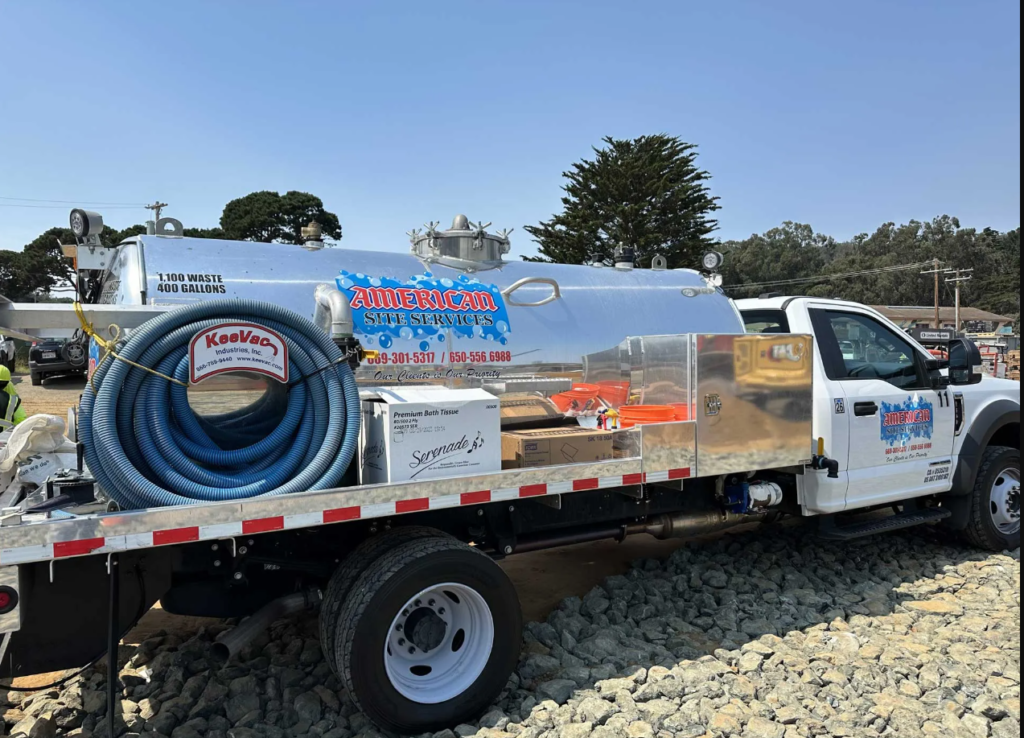
- Waste Disposal: Choose compliant disposal institutions according to local environmental protection requirements and clean septic tanks regularly; it is forbidden to dump waste randomly to avoid environmental penalties; for construction scenarios, it is recommended to cooperate with nearby sewage treatment plants to improve disposal efficiency.
3. Scenario-Based Maintenance Skills
- Short-Term Events (1-3 Days): Simply clean with cleaning fluid after daily use, perform deep cleaning with strong cleaning agents after the event, empty the septic tank and water tank, and check for equipment damage to facilitate subsequent use.
- Long-Term Construction/On-Site: Perform deep cleaning once a week (using strong descaling products), pour a small amount of deodorant after daily use; regularly check the corrosion of frames and floors, and touch up anti-corrosion coatings in a timely manner; increase inspection frequency during the rainy season to avoid water leakage.
- High-Temperature/Low-Temperature Environments: For high-temperature environments, ensure the ventilation system is operating normally, clean ventilation outlets regularly to avoid odor accumulation; for low-temperature environments, do a good job in water pipe insulation to avoid freezing and cracking, and empty water in the water tank when not in use.
- Coastal/Humid Areas: Choose equipment with corrosion-resistant materials, check the corrosion of metal components weekly, and apply anti-rust oil regularly; wipe the interior with a dry cloth after cleaning to avoid mold growth.
4. Common Problem Solutions
- Odor Problems: Check if the ventilation system is blocked and clean debris from ventilation outlets; increase the amount of deodorant, focus on wiping the toilet seal ring (prone to residue accumulation and odor) during daily cleaning; clean the septic tank in a timely manner to avoid overcapacity.
- Pipeline Blockage: Use dredging tools to clean pipelines, avoid pouring easily blocked items such as paper towels and debris; for severe blockages, contact the supplier for professional treatment, do not disassemble the equipment yourself.
- Water and Electricity Failures: Activate the backup generator in case of power outage, and replenish the backup water bucket in case of water outage; for electrical failures (such as air conditioning, sensor accessories), contact the supplier’s after-sales service for maintenance, avoid disassembly by non-professionals to prevent safety risks.
- Water Leakage Problems: Check if the seals of the water tank and septic tank are damaged and repair them with sealant in a timely manner; replace the seal ring or pipeline for pipeline leakage, and stop using it in case of severe water leakage and contact the supplier for maintenance.
Frequently Asked Questions (FAQs)
Q1: Do mobile toilet trailers need to be connected to external water and electricity to use?
A: Not necessarily. Most basic and advanced models are equipped with their own water tanks and septic tanks, which can operate independently without external water and electricity, suitable for remote scenarios without infrastructure; if high-end models are equipped with high-power equipment such as air conditioning and hot water systems, solar power supply or external water and electricity can be selected to flexibly adapt to different scenario needs.
Q2: When renting a mobile toilet trailer, will the supplier be responsible for transportation and installation?
A: Most formal suppliers provide “transportation-installation-recycling” one-stop services, and the fees are usually included in the rental price. It is necessary to confirm in advance: ① Transportation scope (free for local areas, additional fees may be charged for remote areas); ② Installation time limit (usually completed within 24 hours); ③ Whether cleaning and maintenance services are included to avoid additional charges later.
Conclusion
The core of selecting a mobile toilet trailer is “scenario adaptation + demand matching.” Whether for short-term event rental or long-term project purchase, it is necessary to follow the decision-making logic of “first clarify the scenario (number of users, duration, environment) → then precisely select the model (type, configuration) → finally optimize the channel (price, service),” and cooperate with standardized use and maintenance to maximize the equipment value.If you have any further questions, please contact us immediately!