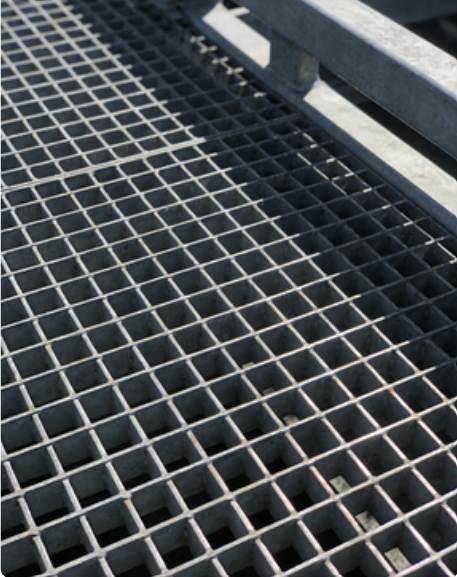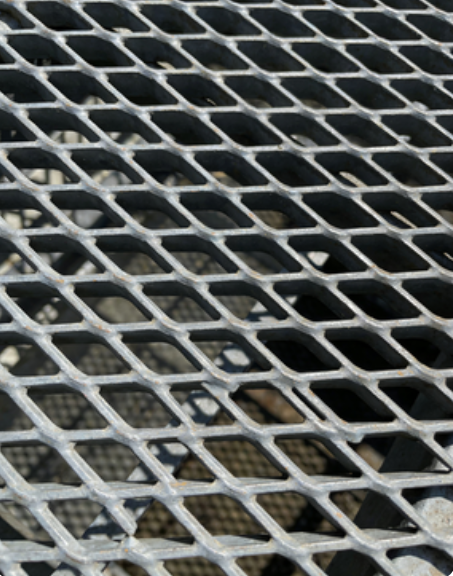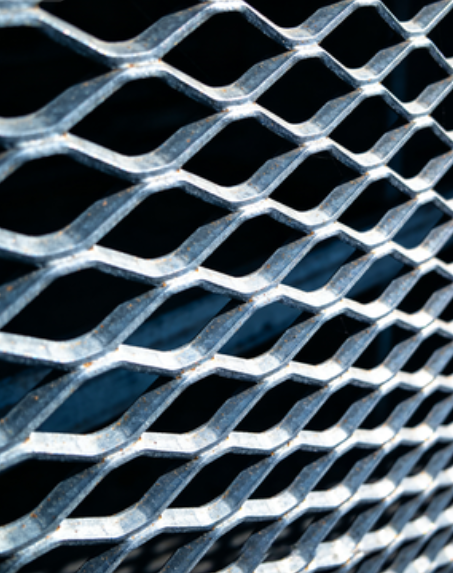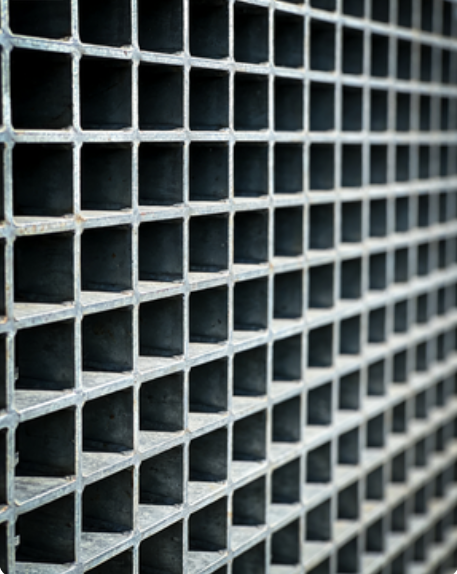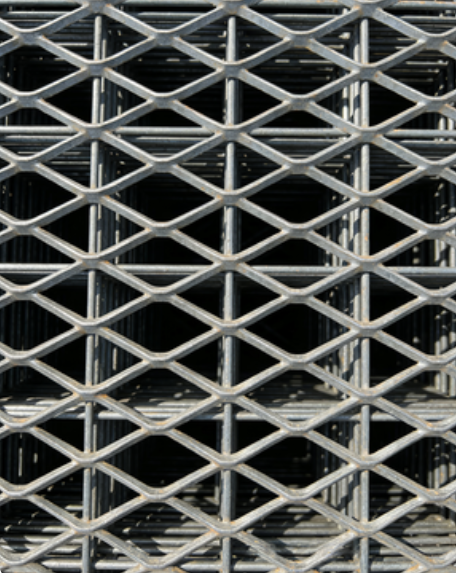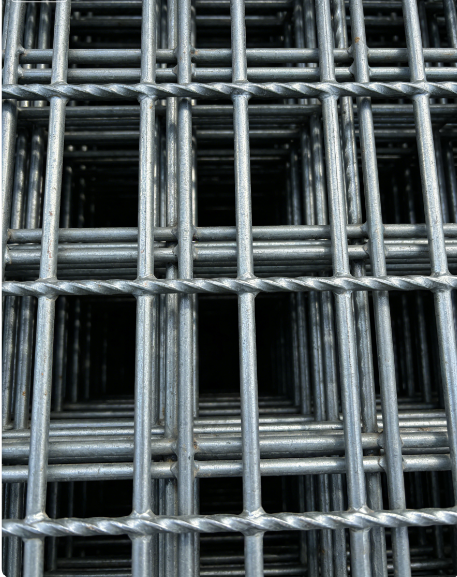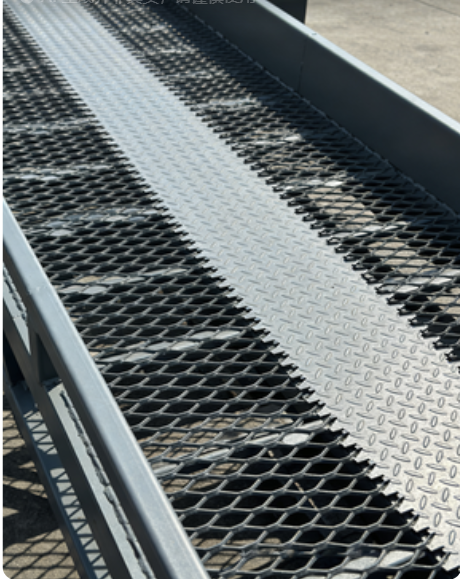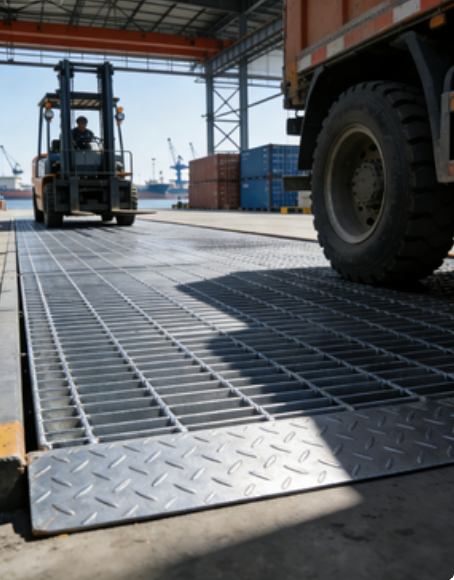
I. First, Clarify When Buying Steel Grating: Which Type Should You Buy? (Select the Right Model to Avoid Mistakes)
The core of steel grating model selection is “scene adaptation”. Steel gratings of different materials, processes, and specifications have great differences in applicable scenarios and service life. Blind purchase will only lead to rework and replacement later, increasing purchase costs. In accordance with the requirements of the new 2026 edition of the “Steel Grating – Technical Requirements and Test Methods” (GB/T XXXX-2025) standard, this article classifies by “material + process + scene” to help you quickly locate suitable products and avoid blind spots in model selection.
(I) Classification by Material: Matching Corrosion Environment and Load-Bearing Requirements
Material is the core determining the load-bearing capacity and corrosion resistance of steel grating. Currently, the mainstream materials on the market are divided into 3 types. When purchasing, you need to accurately select according to the corrosion grade and load-bearing requirements of the service environment:
- Q235B low-carbon steel grating: The first choice for cost-effectiveness, suitable for conventional scenarios. This type of steel grating adopts Q235B low-carbon steel material with a yield strength of ≥235MPa, stable load-bearing performance, and affordable price. It is the first choice for conventional scenarios such as industrial platforms, warehouses, ordinary walkways, and municipal drainage, accounting for more than 70% of the market purchase volume. It should be noted that Q235B material itself does not have strong corrosion resistance and must be used with surface treatment technology, otherwise it is prone to rust and corrosion, shortening the service life.
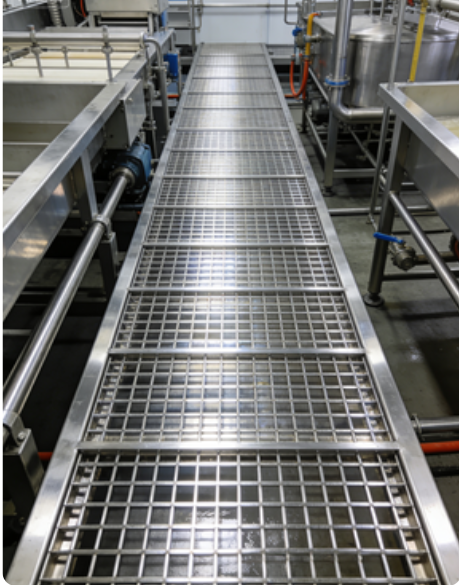
- 304/316L stainless steel grating: The first choice for corrosion resistance, suitable for harsh scenarios. 304 stainless steel grating has good corrosion resistance and can be used in humid and slightly corrosive environments (such as sewage treatment plants and food processing plants); 316L stainless steel grating has stronger corrosion resistance and can resist harsh environments such as coastal high salt spray and chemical plant acid-base corrosion, with a service life of more than 20 years. However, its price is relatively high, 3-5 times that of Q235B steel grating, which is suitable for special projects with extremely high corrosion resistance requirements.
- FRP fiberglass grating: The first choice for light weight and corrosion resistance, suitable for special scenarios. This type of steel grating adopts fiberglass material, which is only 1/4 of the weight of steel, easy to transport and install, and has extremely strong corrosion resistance without additional surface treatment. It is suitable for scenarios with dual requirements for weight and corrosion resistance such as sewage treatment, chemical corrosion, and high-altitude platforms. However, its load-bearing capacity is weak, so it is not suitable for heavy-load areas (such as areas where forklifts pass).
(II) Classification by Process: Focus on Corrosion Resistance and Service Life
The surface treatment process of steel grating directly affects its corrosion resistance and service life. The new 2026 national standard has completely eliminated the cold galvanizing process with a zinc layer ≤15μm. Currently, the mainstream processes on the market are divided into 2 types, which need to be focused on when purchasing:
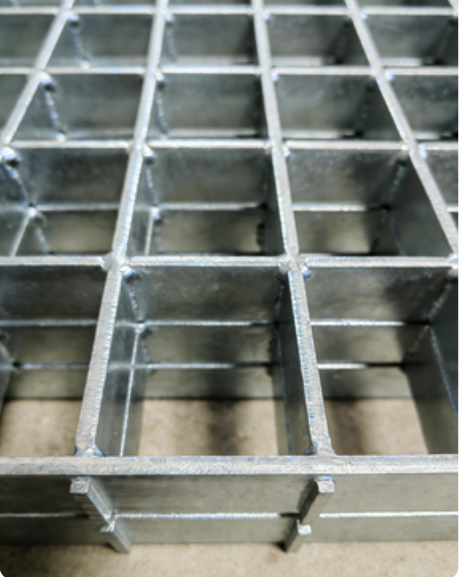
- Hot-dip galvanized steel grating: The first choice for outdoor/humid scenarios, corrosion-resistant and durable. Adopting 800℃ high-temperature hot-dip galvanizing process, the zinc layer thickness is ≥85μm, and the salt spray test must pass 1000 hours without red rust, which is significantly higher than the requirements of the old standard. For outdoor humid or general industrial environments, it is recommended to increase to 90-100μm, and for harsh environments such as coastal high salt spray and chemical corrosion, it needs to reach 100-120μm. The service life of hot-dip galvanized steel grating can reach more than 15 years, suitable for most scenarios such as outdoor platforms, municipal drainage, and chemical plants. It is the type with the largest purchase volume currently. When purchasing, you need to require the supplier to provide a zinc layer thickness test report to ensure it meets the national standard requirements.
- Welded steel grating: The first choice for heavy-load scenarios, with strong load-bearing capacity. Adopting CNC welding process, the shear strength of the welding joint is ≥30kN, without false welding or missing welding, the load-bearing flat steel and crossbar are closely connected, and the load-bearing performance is excellent. It is suitable for scenarios such as industrial heavy-load platforms, forklift passage areas, and heavy equipment maintenance channels. Welded steel grating can be used with hot-dip galvanizing process, taking into account load-bearing and corrosion resistance, and is the core choice for heavy-load projects. When purchasing, you need to check the welding joint strength test report.
(III) Classification by Scene: Accurately Match Specifications to Avoid Over-Purchase
Different service scenarios have great differences in the specifications, load-bearing, and anti-slip requirements of steel grating. Combined with the 2026 industry measured data, the model selection suggestions for the following common scenarios can be directly referred to without additional calculation:
- Steel grating for platforms (industrial/warehouse): Suitable for heavy-load requirements, adopt Q235B material + hot-dip galvanizing process, load-bearing flat steel ≥5mm, crossbar ≥6mm, static load-bearing ≥5 tons/㎡, flat steel spacing is recommended to be 30-40mm to ensure stable load-bearing. When the span is large, reinforcing ribs need to be set to avoid deformation.
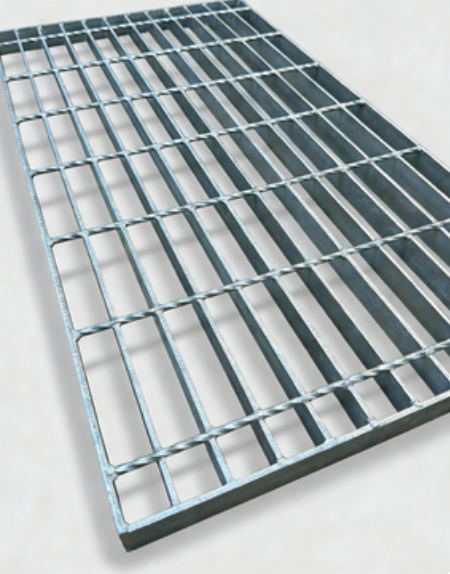
- Steel grating for drainage (municipal/residential area/sewage treatment plant): Suitable for drainage requirements, adopt Q235B/304 material, grid sizes are mainly 30×100mm and 40×50mm, opening rate ≥85% to ensure smooth drainage, and at the same time have anti-slip performance. The surface can adopt embossing design, and the wet friction coefficient is >0.5.
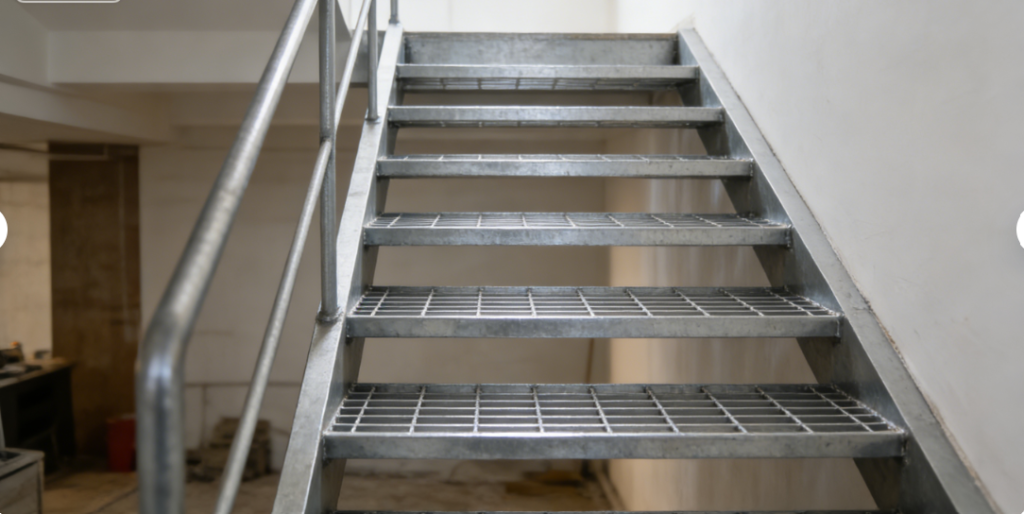
- Steel grating for walkways/stairs (factory/power plant): Suitable for pedestrian passage, adopt Q235B material + hot-dip galvanizing process, flat steel height ≥25mm, thickness ≥3mm, uniform load ≥3kN/㎡, the surface adopts serrated/pattern anti-slip design to avoid pedestrians slipping, especially suitable for scenarios such as power plant main workshop operation platforms and boiler maintenance walkways.
- Custom steel grating (special projects): When conventional specifications cannot meet the requirements, custom services can be selected, such as special-shaped sizes, special load-bearing, special corrosion resistance requirements, etc. When purchasing, engineering parties need to provide detailed scene parameters (span, load type, corrosion environment), and the supplier will conduct customized calculation through BIM load calculation system to ensure it meets the project requirements.
II. Core Skills for Buying Steel Grating: How to Choose? (Avoid Inferior Products and Select High-Quality Ones)
Many purchasers are prone to the misunderstanding of “only looking at the price and ignoring the quality” when buying steel grating, leading to buying inferior products with false specifications and shoddy materials. Later, problems such as rust, deformation, and insufficient load-bearing occur, which instead increase rework costs. Combined with the steel grating industry standards (GB/T 4001.1-2019, GB/T 13912-2020) and 10 years of purchasing experience, 5 core purchasing indicators are summarized to teach you to quickly distinguish high-quality steel grating and avoid inferior traps.
(I) Indicator 1: Zinc Layer Thickness (Key to Corrosion Resistance, Must Check!)
Zinc layer thickness is the core indicator of hot-dip galvanized steel grating, directly determining its corrosion resistance and service life. For high-quality hot-dip galvanized steel grating, the zinc layer thickness is ≥85μm, which can be directly detected by magnetic non-destructive testing. If there is any dispute, the weighing method shall be used as the arbitration standard; the zinc layer thickness of inferior steel grating is less than 50μm, and even the cold galvanizing process is adopted. The surface zinc layer is easy to fall off, and rust spots will appear within 3 months in the rainy season, which cannot pass the project acceptance. When purchasing, you need to clearly require the supplier to provide a zinc layer thickness test report. On-site, you can conduct a scratch test with a key. The high-quality zinc layer will not fall off or show the bottom.
(II) Indicator 2: Load-Bearing Performance (Core of Safety, Cannot Be Ignored)
The load-bearing performance of steel grating is determined by the specifications, spacing, and material of the load-bearing flat steel. When purchasing, you need to check whether the load-bearing parameters meet the standards according to the scene requirements. For high-quality steel grating, the flat steel thickness in heavy-load scenarios is ≥5mm, the shear strength of the welding joint is ≥30kN, the deflection is controlled ≤1/200 of the span, and the static load-bearing is ≥5 tons/㎡; the flat steel thickness in ordinary pedestrian scenarios is ≥3mm, and the uniform load is ≥3kN/㎡. Inferior steel grating mostly adopts thin flat steel and scrap steel materials, or has false welding and missing welding phenomena, with insufficient load-bearing capacity. It is easy to deform and break after laying, posing potential safety hazards. When purchasing, you can require the supplier to provide a load-bearing test report. Before bulk purchase, you need to confirm the sample first and conduct on-site load-bearing test.
(III) Indicator 3: Anti-Slip Design (Pedestrian Safety, Focus on)
For steel grating used in pedestrian passage and humid environments, anti-slip performance is crucial. The surface of high-quality steel grating adopts embossing, serration and other anti-slip designs, with a wet friction coefficient >0.5, so pedestrians are not easy to slip when walking, especially suitable for humid scenarios such as power plants and sewage treatment plants; the surface of inferior steel grating is smooth without anti-slip design, and it is easy to slip in wet environments, which does not meet the safety requirements. When purchasing, you can conduct an on-site water pouring test to observe the anti-slip effect, and check whether the anti-slip design parameters meet the scene requirements.
(IV) Indicator 4: Grid Size (Adapt to Requirements, Precise Control)
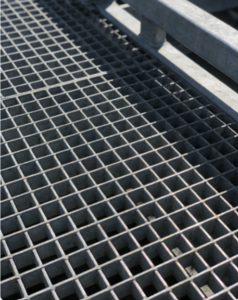
The grid size needs to be accurately selected according to the service scenario. Too large is easy to cause debris to fall and insufficient load-bearing, and too small will affect the drainage and ventilation effect. For drainage scenarios, it is recommended to choose 30×100mm and 40×50mm grids to balance drainage and load-bearing; for heavy-load scenarios, it is recommended to choose 30×30mm and 40×40mm grids to enhance load-bearing capacity; for precision operation scenarios (such as aircraft maintenance platforms), ultra-dense spacing of 25×50mm can be adopted to prevent tools from falling. When purchasing, you need to clearly specify the grid size and require the supplier to produce strictly according to the specifications with an error ≤2mm to avoid size deviation leading to unusability.
(V) Indicator 5: Material and Process (Foundation of Quality, Source Control)
Material and process are the foundation of steel grating quality, which need to be focused on when purchasing: in terms of material, Q235B material needs to provide a material report to ensure the yield strength ≥235MPa, and reject inferior products with Q195 posing as Q235; stainless steel material needs to provide a material certificate to ensure that 304/316L material meets the standards and avoid shoddy products. In terms of process, welded steel grating needs to adopt CNC welding, with uniform and firm welding joints, without false welding, missing welding, or fake welding phenomena; hot-dip galvanized steel grating needs to adopt high-temperature hot-dip galvanizing, with uniform zinc layer, without sagging, bottom exposure, or falling off phenomena. When purchasing, you can observe the product process on site and require the supplier to provide relevant qualification certificates.
Supplement: 3 Typical Characteristics of Inferior Steel Grating, Recognizable at a Glance
- Characteristic 1: The zinc layer is thin and easy to fall off, with sagging and bottom exposure on the surface. The zinc powder falls off with a light scratch by hand, which does not meet the requirements of the new national standard;
- Characteristic 2: The flat steel thickness does not meet the standard, falsely marked as 3mm but actually only 2mm, adopting scrap steel material, with rust and scratches on the surface, and poor load-bearing capacity;
- Characteristic 3: The welding joints are not firm, with false welding and missing welding phenomena. The crossbar is easy to loosen or even fall off when shaken by hand, posing potential safety hazards.
III. Channel Selection for Buying Steel Grating: Where to Buy? (Choose the Right Channel to Save Money and Worry)
The purchase channel of steel grating directly affects the price, quality, and delivery efficiency. Different purchase channels have great differences in advantages, disadvantages, and suitable groups. Combined with the 2026 steel grating market pattern, the following 4 mainstream purchase channels help you choose the most suitable one, avoid intermediate dealer premium, and find reliable suppliers.
(I) Channel 1: Direct Supply from Source Manufacturers (First Choice for Bulk Purchase, Highest Cost-Effectiveness)
Direct supply from source manufacturers is the first choice for B-end purchasers (enterprises, engineering parties, wholesalers), especially for bulk purchase and customized purchase needs, with extremely obvious advantages. At present, domestic steel grating source manufacturers are mainly concentrated in Anping, Hebei, the “Hometown of Wire Mesh in China”. Such manufacturers have full-chain production capacity, can provide integrated services from design, production to delivery, without intermediate links. The price is 15%-30% lower than that of intermediate dealers, and can also provide customized services to adapt to special project needs.
Advantages: Low price, controllable quality, customizable, stable supply, large bargaining space for bulk purchase. Most manufacturers can provide free samples and test reports. Some high-quality manufacturers have also passed ISO9001 quality management system certification, EU CE and other international certifications, and their products meet national and international standards.
Disadvantages: High minimum order quantity requirements (conventional minimum order quantity is 50-300 pieces/㎡), which is difficult to meet for scattered purchase. It is necessary to directly connect with manufacturers, with slightly higher communication costs.
Suitable groups: Engineering parties, enterprises, wholesalers, bulk purchasers (≥50㎡), and those with customized purchase needs.
(II) Channel 2: Online B2B Platforms (Convenient Comparison, Suitable for All Types of Purchases)
Online B2B platforms (such as Made-in-China.com, Alibaba) are currently the most convenient purchase channels. A large number of steel grating source manufacturers and wholesalers gather on the platform. Purchasers can directly search for keywords such as “steel grating purchase” and “hot-dip galvanized steel grating wholesale”, compare the prices, specifications, and reputations of multiple suppliers, without running factories offline, saving time and energy.
Advantages: A large number of suppliers, convenient comparison, transparent prices, can screen suppliers with low minimum order quantity, suitable for scattered purchase and bulk purchase. The platform can provide transaction guarantee to avoid payment risks. Some platforms also support online inquiry and sample application, with simple and efficient purchase process.
Disadvantages: The qualifications of suppliers are uneven, which need to be carefully screened to avoid encountering false suppliers and inferior products. Some suppliers have excessive pricing, which requires multiple comparisons and bargaining.
Suitable groups: All purchasers, especially scattered purchasers (<50㎡), first-time purchasers, and those who need to compare prices from multiple parties.
(III) Channel 3: Local Building Materials Markets (On-Site Inspection, Suitable for Scattered Purchase)
Local building materials markets are the first choice for C-end purchasers (individuals, small-scale decoration). There are various steel grating distributors in the market. Purchasers can inspect goods on site, touch samples, intuitively understand product quality, specifications, and anti-slip effects, without waiting for logistics. They can purchase and pick up goods on the same day, suitable for emergency purchase and scattered purchase.
Advantages: On-site inspection, intuitive and controllable, fast pick-up, no minimum order quantity requirements, convenient communication, on-site bargaining, suitable for emergency purchase.
Disadvantages: High price (20%-40% higher than that of source manufacturers), few suppliers, limited product specifications, difficult to meet customized services, mainly conventional specifications. Some distributors sell inferior products, which need to be carefully identified.
Suitable groups: Individuals, small-scale decoration teams, scattered purchasers (<10㎡), and those with emergency purchase needs.
(IV) Channel 4: Intermediate Dealers/Wholesalers (Fast Supply, Suitable for Emergency Bulk Purchase)
Intermediate dealers/wholesalers mainly connect source manufacturers and purchasers, have a certain inventory, fast supply speed, and can provide supporting services (such as transportation, installation guidance), suitable for emergency bulk purchase and conventional purchase needs without customization.
Advantages: Fast supply, can provide supporting services, convenient communication, low minimum order quantity requirements, suitable for emergency bulk purchase.
Disadvantages: Price premium (10%-20% higher than that of source manufacturers), difficult quality control. Some intermediate dealers pass shoddy products off as high-quality ones and falsely mark specifications. They have weak customized service capabilities and cannot meet special needs.
Suitable groups: Those with emergency bulk purchase, no customization needs, and pursuit of supply speed.
Supplement: 3 Core Standards for Selecting Suppliers to Avoid Pitfalls
- Standard 1: Complete qualifications. It is necessary to have relevant qualifications such as production license, ISO9001 quality certification, and test report. The products meet the national standard requirements. Priority is given to manufacturers with third-party test reports and blockchain traceability codes, and 128 items of data can be queried and verified in real time.
- Standard 2: Good reputation. The strength of the supplier can be understood through platform evaluations, industry reputation, and past cases. Priority is given to suppliers with large-scale engineering cases (such as power plants, sewage treatment plants, and municipal projects), with more guaranteed quality.
- Standard 3: Perfect after-sales service. Clarify the after-sales response time and quality problem handling plan. If there are specification discrepancies or quality problems, free return and exchange can be provided, and supporting services such as installation guidance and maintenance skills can also be provided.
IV. Price Control Skills for Buying Steel Grating: How to Buy More Cost-Effectively? (Cost-Effective Purchase, No Wasted Money)
For steel grating purchase, cost-effectiveness is one of the core needs. Most purchasers hope to “buy the best products with the least money”, but they are often prone to “low-price traps”. Combined with the 2026 steel grating market price (hot-dip galvanized type: 180-320 yuan/㎡; stainless steel type: 350-580 yuan/㎡; heavy-duty customized type: 300-450 yuan/㎡), 4 core price control skills are summarized to help you control purchase costs, buy cost-effective steel grating, and avoid excessive pricing and low-price traps.
(I) Skill 1: Bargain for Bulk Purchase to Get the Maximum Discount
The price of steel grating is directly related to the purchase volume. The larger the purchase volume, the larger the bargaining space, which is the core price control skill for bulk purchase. For bulk purchase (≥100㎡), the bargaining space of source manufacturers can reach 10%-15%. Some manufacturers can also provide value-added services such as free transportation, free samples, and free testing; for bulk purchase on online B2B platforms, 3-5 suppliers can be connected at the same time, compare quotes, select the most cost-effective one, and require the supplier to give a bulk purchase discount. When purchasing, you need to clearly specify the purchase volume and take the initiative to bargain to avoid directly accepting the quote and wasting costs.
(II) Skill 2: Avoid Intermediate Links and Directly Connect with Source Manufacturers
The core profit of intermediate dealers and distributors is the “price difference”. After purchasing from source manufacturers, they sell to purchasers at a price increase of 10%-40%, leading to a substantial increase in purchase costs. Therefore, when purchasing, try to avoid intermediate links and directly connect with source manufacturers, especially for bulk purchase and customized purchase, which can save 15%-30% of purchase costs. On online B2B platforms, suppliers marked with “source manufacturers” can be screened, or steel grating manufacturers in Anping, Hebei can be directly contacted for inquiry and connection to reduce intermediate premium.
(III) Skill 3: Select the Right Model on Demand to Avoid Over-Purchase
Many purchasers blindly choose high-end materials and large-size steel grating for “insurance”, leading to increased purchase costs, which is actually unnecessary. When purchasing, you need to select the right model according to the service scenario to avoid over-purchase: for conventional scenarios (such as ordinary walkways and municipal drainage), Q235B + hot-dip galvanized steel grating can be selected, and there is no need to choose stainless steel material; for ordinary pedestrian scenarios, 3mm thick flat steel can be selected, and there is no need to choose 5mm thick flat steel, which not only meets the requirements but also saves costs. At the same time, avoid “one-size-fits-all parameters”. You need to clearly inform the manufacturer of the scene details, such as span, load type, corrosion environment, etc., to accurately match the specifications and avoid over-purchase.
(IV) Skill 4: Compare Multiple Parties and Reject Low-Price Traps
The price of steel grating on the market varies greatly. Some suppliers quote extremely low prices to attract customers, but the product quality cannot be guaranteed, which is a “low-price trap”. When purchasing, you need to compare multiple parties (at least 3 suppliers). The comparison is not only about price, but also about quality, specifications, after-sales service, qualifications, etc. Priority is given to suppliers with “reasonable price, up-to-standard quality, and perfect after-sales service”, rather than simply choosing low-price products. For example, for the same hot-dip galvanized steel grating, low-price products may have insufficient zinc layer thickness and inferior materials, which are prone to rust later. The rework cost is far more than the purchase cost saved in the early stage, which is not worth the loss. At the same time, you can pay attention to the 2026 opening manufacturer promotion activities. Some manufacturers will launch bulk purchase discounts and free value-added services to seize the market, and you can purchase at this time to save costs.
Supplement: 2026 Steel Grating Reference Price Range (Precise Price Control, Clear in Mind
- Q235B + hot-dip galvanized steel grating (conventional specifications): 180-320 yuan/㎡ (grid 30×100mm, flat steel 3-5mm);
- 304 stainless steel grating (conventional specifications): 350-580 yuan/㎡; 316L stainless steel grating: 500-800 yuan/㎡;
- FRP fiberglass grating: 200-400 yuan/㎡ (adjusted according to corrosion grade and load-bearing);
- Custom steel grating: 5%-15% increase on the basis of conventional prices (adjusted according to customization difficulty and specifications, heavy-duty customized type: 300-450 yuan/㎡).
V. Notes for Buying Steel Grating + After-Sales Guide (Avoid Pitfalls and Conclude, Worry-Free Throughout)
For steel grating purchase, it is not only necessary to select the right products, find the right channels, and control the price, but also pay attention to the details in the purchase process to avoid purchase risks. At the same time, do a good job in after-sales service, installation, and maintenance after purchase to extend the service life of steel grating and ensure project safety. Combined with industry chaos and purchasing experience, the purchase notes and after-sales guide are summarized to help you avoid pitfalls throughout the process and purchase without worry.
(I) Purchase Notes (4 Key Points to Avoid Risks)
- Key Point 1: Sign a formal contract and clarify all details. When purchasing, regardless of the purchase volume, a formal purchase contract must be signed with the supplier, clarifying product specifications, materials, zinc layer thickness, load-bearing parameters, price, delivery date, payment method, after-sales terms, etc. Especially for customized purchase, the customization requirements and sample confirmation process must be clarified to avoid verbal guarantees and no basis for disputes later. The contract should clearly state that “free return and exchange can be provided if the specifications are inconsistent or the quality is not up to standard”, and the liquidated damages clause should be clarified to restrict the supplier.
- Key Point 2: Verify qualifications and test reports to ensure quality meets standards. When purchasing, you need to require the supplier to provide relevant qualification certificates (production license, ISO9001 certification, CE certification, etc.) and product test reports (zinc layer thickness, load-bearing performance, material testing, etc.). Before bulk purchase, you need to apply for free samples, verify the sample quality on site, and sign the contract and place an order for production only after confirming that it meets the requirements to avoid buying inferior products. Focus on verifying the dual-standard certification of YBT4001.1-2019 (Steel Grating) and GB/T 13912-2020 (Hot-Dip Galvanizing) to ensure product compliance.
- Key Point 3: Clarify the payment method to avoid payment risks. When paying, try to choose the method of “paying 30%-50% advance deposit, and paying the balance after acceptance before delivery” to avoid full advance payment, prevent suppliers from not delivering goods or delivering inferior products after receiving the advance payment, and avoid payment risks; for online purchase, platform guaranteed transaction can be adopted to further protect their own rights and interests.
- Key Point 4: Confirm the delivery date and transportation method to avoid delaying the construction period. When purchasing, the delivery date must be clarified. Especially for engineering purchase, the supplier must be required to deliver on time in combination with the project progress to avoid delaying the construction period; at the same time, the transportation method must be clarified. For bulk purchase, the supplier can be required to provide free transportation. For scattered purchase, the transportation cost can be negotiated, and the loss liability during transportation can be clarified. If transportation damage occurs, the supplier shall be responsible for replacement and maintenance.
(II) After-Sales Guide (Post-Purchase Needs, Full Coverage)
- 1. Installation Guide: The installation of steel grating must follow the principle of “light handling and precise fixing” to avoid collision and scratching the zinc layer, which will affect the corrosion resistance. Before installation, the steel structure support must be inspected to ensure that the support is level (error ≤2mm) and there are no burrs at the welding points; during installation, 304 stainless steel bolts + rubber gaskets are preferred for fixing. Each steel grating has at least 4 fixing points, and welding is strictly prohibited (welding will burn through the zinc layer, leading to local corrosion); after installation, timely clean the surface oil and debris, check the fixing situation, and avoid loosening. If the supplier can provide installation guidance, it can be preferred to ensure standardized installation and extend the service life.
- 2. Handling of Quality Problems: After purchase, if it is found that the steel grating has specification discrepancies or quality problems (such as zinc layer falling off, false welding, insufficient load-bearing, rust, etc.), you need to contact the supplier in a timely manner, provide relevant evidence (photos, test reports), and require the supplier to provide free return, exchange, and maintenance in accordance with the contract agreement. At the same time, require the supplier to bear the losses such as construction period delay and rework caused thereby to avoid damaging their own rights and interests.
- 3. Daily Maintenance Skills: Daily maintenance of steel grating can extend its service life and reduce replacement costs. It is recommended to maintain it once a quarter, rinse the surface with high-pressure water gun (water pressure ≤5MPa), and clean up debris and oil; check whether the zinc layer has scratches and falls off. Small scratches can be treated with zinc-based repair pens to avoid corrosion expansion; check whether the bolts are loose and tighten them in a timely manner; in harsh environments such as coastal areas and chemical plants, the zinc layer should be tested once a year, and secondary galvanizing should be carried out if necessary to enhance corrosion resistance.
VI. Frequently Asked Questions (FAQs) About Steel Grating Purchase – Solve the Last Doubts
Combined with the high-frequency questions of purchasers, 10 of the most common steel grating purchase questions are sorted out, and accurate and professional answers are given to help you solve the last doubts and easily complete the purchase.
- Q1: Which type of steel grating is best for outdoor purchase? — A: Priority is given to Q235B + hot-dip galvanized steel grating (zinc layer ≥85μm), which is corrosion-resistant and durable, with a service life of more than 15 years, suitable for most outdoor scenarios; for coastal high salt spray and chemical corrosion environments, 316L stainless steel grating can be selected with stronger corrosion resistance.
- Q2: Is custom steel grating expensive? Is the cycle long? — A: Custom steel grating is 5%-15% higher than conventional specifications, but it has strong adaptability, avoids later rework, and is more cost-effective in the long run, and can bargain with the manufacturer; the customization cycle depends on the purchase volume and customization difficulty. The conventional customization cycle is 3-7 days, and the bulk customization cycle (≥100㎡) is 7-15 days. You can communicate with the manufacturer in advance to ensure on-time delivery.
- Q3: How to judge the quality of hot-dip galvanized steel grating? — A: Focus on 3 points: ① Zinc layer thickness, ≥85μm, detected by thickness gauge, on-site scratch test can be conducted without falling off or bottom exposure; ② Welding process, uniform and firm welding joints, without false welding or missing welding; ③ Material, Q235B material needs to provide a material report, no scrap steel or impurities, no rust or scratches on the surface. At the same time, you can require the supplier to provide a salt spray test report to ensure that the corrosion resistance meets the standards.
- Q4: What is the minimum order quantity for steel grating wholesale? — A: The conventional minimum order quantity is 50-300 pieces/㎡ (varies by supplier). Suppliers with low minimum order quantity (minimum order quantity 10-50㎡) can be screened on online B2B platforms. For scattered purchase (<10㎡), local building materials markets and online scattered suppliers can be selected with no minimum order quantity requirements.
- Q5: Can I return the goods if the specifications are inconsistent or the quality is problematic? — A: As long as a formal contract is signed and relevant clauses are clarified, free return and exchange can be required from the supplier if the specifications are inconsistent or the quality is not up to standard, and the supplier can also be required to bear relevant losses; before purchase, the supplier’s after-sales policy must be confirmed to avoid verbal commitments and ensure their own rights and interests.
- Q6: What is the general service life of steel grating? — A: It depends on the material, process, and service environment: Q235B + hot-dip galvanized steel grating has a service life of 15-20 years in conventional outdoor environments and 10-15 years in harsh environments; 304 stainless steel grating has a service life of 20-30 years; 316L stainless steel grating has a service life of more than 30 years; FRP fiberglass grating has a service life of 15-25 years, which can be extended with proper daily maintenance.
- Q7: What parameters do I need to provide when purchasing steel grating? — A: For conventional purchase, it is necessary to provide material, process, grid size, flat steel thickness, and purchase volume; for customized purchase, it is necessary to provide scene parameters (service scenario, span, load-bearing requirements, corrosion environment), customized size, special-shaped requirements, etc. The supplier can provide accurate model selection and quotation according to the parameters.
- Q8: How to avoid buying inferior products when purchasing steel grating online? — A: ① Screen suppliers marked with “source manufacturers” and “integrity merchants”; ② Check the supplier’s qualifications, test reports, past cases, and platform evaluations; ③ Apply for free samples first and verify the quality on site; ④ Sign a formal contract and clarify after-sales terms; ⑤ Adopt platform guaranteed transaction to avoid payment risks.
- Q9: What is the general installation cost of steel grating? — A: The installation cost depends on the installation difficulty, scenario, and purchase volume. The installation cost for conventional scenarios (flat platforms, drainage ditches) is 20-50 yuan/㎡, and the installation cost for high-altitude scenarios and complex scenarios (high-altitude platforms, special-shaped installation) is 50-100 yuan/㎡. For bulk purchase, you can negotiate with the supplier to get free installation guidance or reduce part of the installation cost.
- Q10: What are the new industry requirements for purchasing steel grating in 2026? — A: The core is to follow the new 2026 edition of the “Steel Grating – Technical Requirements and Test Methods” (GB/T XXXX-2025), which was implemented on October 1, 2025. This standard has completely eliminated the cold galvanizing process with a zinc layer ≤15μm, clarified that the hot-dip galvanized layer thickness is ≥85μm, and the salt spray test must pass 1000 hours without red rust. At the same time, it has put forward more stringent requirements for load-bearing performance and welding process. When purchasing, you must ensure that the product meets the new national standard to avoid failing the project acceptance.
VII. Summary: Core Points of Steel Grating Purchase in 2026
The core of steel grating purchase is “selecting the right model on demand, finding the right channel, controlling the price, and avoiding pitfalls”. Combined with this guide, the 2026 steel grating purchase can be summarized into 3 core steps: Step 1, clarify the service scenario, accurately select the model according to material, process, and specifications, avoid model selection errors, and give priority to products that meet the new national standard and adapt to the scenario; Step 2, select the appropriate purchase channel, give priority to source manufacturers for bulk purchase and customized purchase, select online B2B platforms and local building materials markets for scattered purchase and emergency purchase, avoid intermediate dealer premium, and strictly screen suppliers to ensure complete qualifications and good reputation; Step 3, control purchase details, sign a formal contract, verify test reports, bargain on demand, avoid purchase risks, and do a good job in installation and maintenance after purchase to extend the service life of steel grating and ensure project safety.