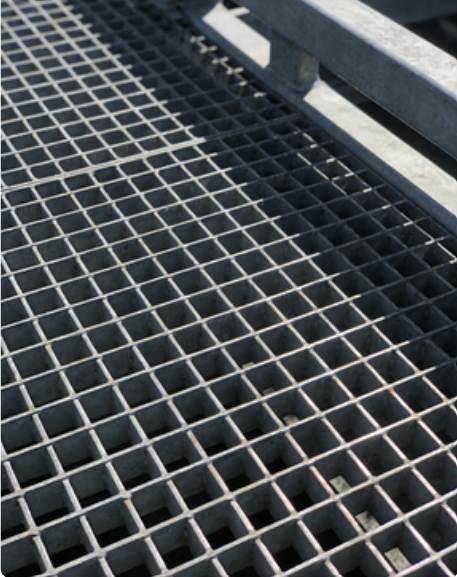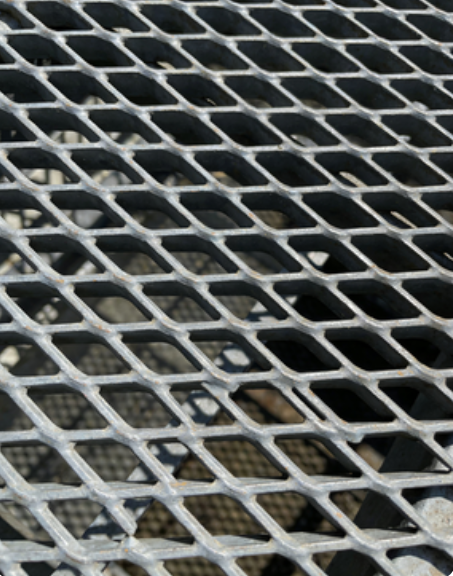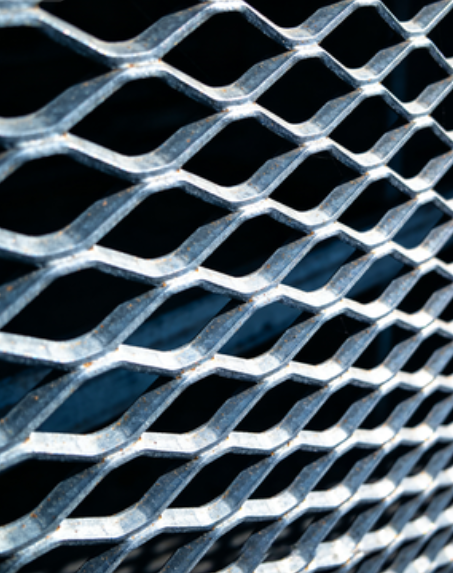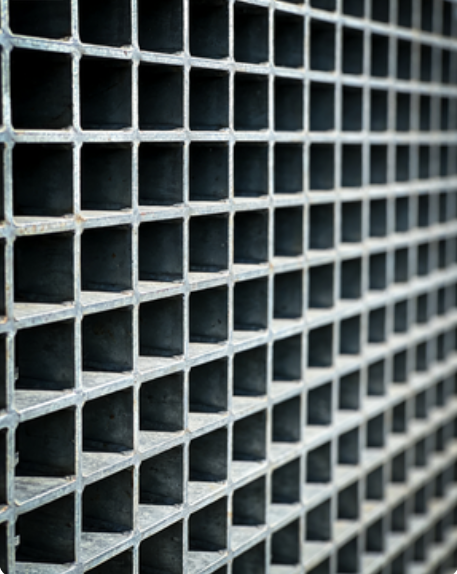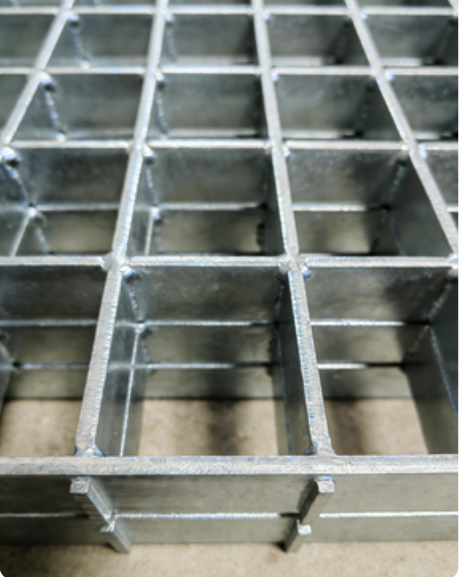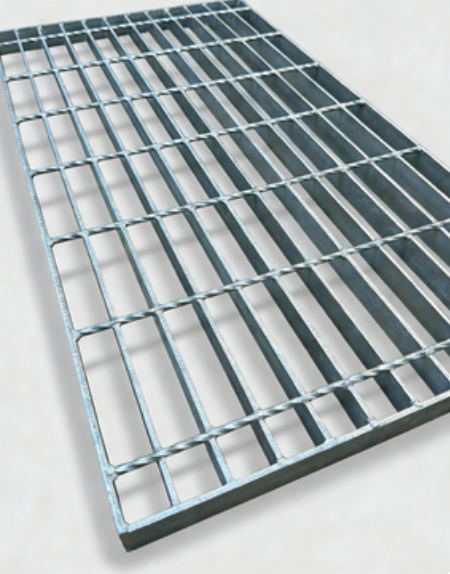
I. Local Used Steel Grating Purchase Channels (Quickly Find “Near Me” Sources for Immediate Pickup)
When purchasing used steel grating, “local accessibility” is the core demand — no need for long logistics waiting, on-site inspection is available, and transportation loss and cost are reduced. Combining industry purchasing habits and popular source types in Google searches, 4 types of highly suitable local channels are sorted out, covering different purchase quantities and budget needs. Each channel is marked with advantages, disadvantages and practical guidelines to facilitate your selection according to your needs.
1.1 Local Offline Pickup Points (Highly Recommended for “Immediate Pickup” Needs)
Local offline pickup points are the most convenient channels for purchasing used steel grating, mainly including three categories: industrial waste recycling stations, used building materials markets, and special steel grating dealer pickup points. The core advantages of these channels are “on-site inspection, immediate pickup and negotiable price”, which are especially suitable for small-batch purchases (10-50 pieces) or emergency purchase scenarios.
Industrial waste recycling stations: They mainly recycle used steel grating eliminated and replaced by various industrial projects. The sources are mainly Q235 low-carbon steel and hot-dip galvanized steel grating with uneven quality but the lowest price (reference price: $0.75-$1.50 per pound). They are suitable for scenarios with low requirements on quality and temporary use (such as temporary enclosures and simple walkways). When purchasing, it should be noted that most of these sources are leftover cutting or slightly worn products. It is necessary to on-site verify the core parameters such as the thickness of load-bearing flat steel and the spacing of crossbars to avoid failure to meet the load-bearing requirements.
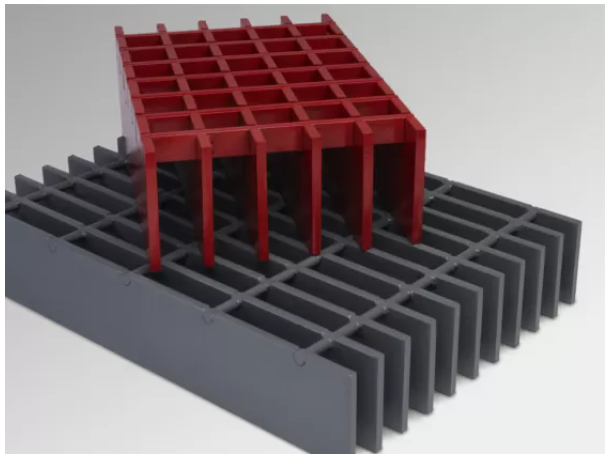
Used building materials markets: They gather various used building materials dealers. The sources of used steel grating are more concentrated, the quality is relatively regular, covering various types such as serrated steel grating, stainless steel steel grating and drainage ditch covers, which are suitable for diverse scenarios such as industry and municipal administration. The advantage is that you can compare multiple sources, dealers can provide simple loading and unloading services, and some support short-term quality assurance (7-15 days); the disadvantage is that the price is slightly higher than that of waste recycling stations, and the bargaining space for bulk purchases is limited.
Special steel grating dealer pickup points: Established by steel grating manufacturers or large dealers, the sources are mostly project surplus, sample replacement or slightly defective used steel grating (such as slight sagging on the surface, dimensional deviation within ±3mm, which does not affect use). They have the best quality and standard specifications, and some can provide factory inspection reports. They are suitable for scenarios with certain quality requirements and bulk purchases (more than 50 pieces). The price of this type of channel is medium. For bulk purchases, you can negotiate a 5%-10% discount, and various payment methods are supported (cash, check, credit card). No advance appointment is required, and you can pick up the goods immediately after on-site confirmation.
1.2 Local Online Source Platforms (Suitable for “Convenient Price Comparison” Needs)
With the popularization of online purchasing, local online platforms have become an important supplement to the purchase of used steel grating. The core advantages are “price comparison without leaving home, quick contact with sellers, and timely update of source information”, which are suitable for buyers with tight time who want to compare prices through multiple channels. 3 types of highly suitable platforms are recommended:
Local classified information platforms (such as Craigslist local section): This type of platform has the richest local sources of used steel grating. Most sellers are individuals, small dealers or engineering teams with transparent prices. You can directly contact sellers to make an appointment for on-site inspection and pickup time. In practice, you can enter keywords such as “local used steel grating” and “used steel grating pickup” in the search box, filter sources “updated in the last 7 days”, prioritize sellers marked with “on-site inspection and free loading and unloading”, and check the seller’s past release records to avoid false sources.
Cross-border local source platforms (such as Alibaba.com local seller section): Suitable for buyers with bulk purchases (more than 100 pieces). Local sellers on the platform are mostly steel grating manufacturers or large dealers with complete source specifications, covering various materials such as 304 stainless steel, 316L stainless steel and hot-dip galvanizing. They can provide value-added services such as bulk price negotiation, door-to-door delivery and quality inspection. When purchasing, you need to filter “US local sources” and “support pickup” sellers, communicate with them in advance about the source quality, specification parameters and after-sales terms to avoid mismatched goods later.
Local building materials communities/WeChat Moments: Join local industrial building materials procurement groups and used building materials exchange groups. Most members in the groups are peers or local dealers with purchasing experience. The sources are highly reliable, the price bargaining space is large, and some sellers can provide “inspect before payment” services. The sources of this type of channel are mostly urgent sale products, suitable for emergency purchases, but the source quantity is limited. You need to pay attention to the information in the group in time to avoid missing suitable sources.
1.3 Local Factory Surplus/Used Replacement Channels (Suitable for “Bulk Purchase” Needs)
Many local steel grating manufacturers (such as regional dealers like Hebei Shangchi and Wuxi Changhong) will sell project surplus, sample replacement or used steel grating returned by customers. The core advantages of these sources are “standard specifications, guaranteed quality and preferential prices for bulk purchases”, which are suitable for bulk purchase needs such as industrial projects and large warehouses.
Most of the sources of this type of channel are unused or slightly used products, covering materials such as Q235 low-carbon steel and 304 stainless steel, with specifications complying with industry standards (such as conventional specifications like flat steel spacing 30mm and crossbar spacing 100mm). Some can provide ISO 9001 quality management system certification and product inspection reports. When purchasing, you can obtain the manufacturer’s contact information through the local manufacturer’s official website, industry exhibitions or peer recommendations, consult the source category, quantity and price in advance, make an appointment for on-site inspection time, enjoy a 8-9 fold discount for bulk purchases, and some manufacturers can provide free loading and unloading and on-site measurement and adaptation services.
1.4 Local Engineering Teams/Construction Units (Hidden High-Quality Channels)
After the completion of projects, various local industrial construction teams and municipal engineering units often have some remaining used steel grating. These sources have good quality, light wear, mostly standard specifications adapted to the project, lower prices than the market average, and on-site inspection and immediate pickup are available, which are suitable for buyers with clear specification requirements.
You can contact construction units through local engineering exhibitions and peer introductions, and explain your purchase needs (specifications, quantity, budget). The used steel grating of construction units is mostly for urgent sale with large bargaining space, and some can provide free loading and unloading services. It should be noted that the quantity of such sources is limited, mostly single specifications. Before purchasing, you need to confirm whether the specifications are suitable for your own scenario to avoid being unusable.
II. Guide to Selecting Cost-Effective Used Steel Grating (Select According to Scenarios, Save Money and Adapt)
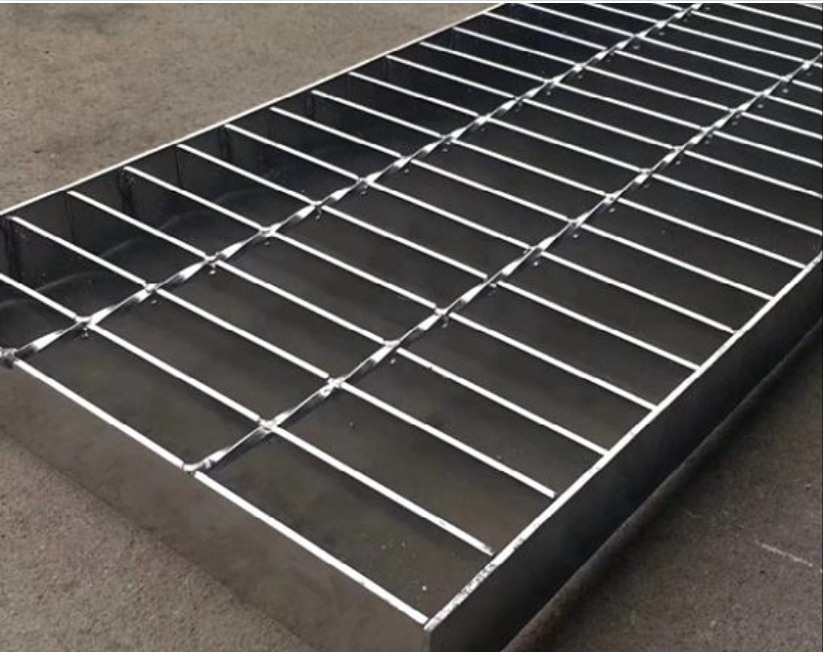
When purchasing used steel grating, “cost-effectiveness” is not only low price, but also “suitable for scenarios and up-to-standard quality” — avoid purchasing products that do not meet the needs and cannot be used due to blind pursuit of low prices, which will increase the purchase cost instead. Combining professional knowledge in the steel grating industry, this article helps you select cost-effective used steel grating from three dimensions: price reference, scenario adaptation and selection skills.
2.1 Local Used Steel Grating Price Reference (Clarify Market Price, Avoid High-Price Pitfalls)
The price of local used steel grating is affected by four factors: material, specification, quality and purchase quantity. Combining the current industry market price (2026 reference), the price range of different types of used steel grating is sorted out for you to compare prices and avoid being cheated by high prices:
Material dimension: Q235 low-carbon steel used steel grating (medium quality): $0.75-$1.50 per pound, or $10-$30 per piece; Hot-dip galvanized used steel grating (average zinc layer thickness ≥70μm, good quality): $1.2-$2.0 per pound, or $20-$45 per piece; 304 stainless steel used steel grating (good quality): $3.0-$5.0 per pound, or $50-$65 per piece; 316L stainless steel used steel grating (corrosion-resistant, good quality): $4.5-$6.0 per pound, or $60-$80 per piece.
Specification dimension: Small specifications (such as 1000mm×500mm, flat steel 20×3mm): $10-$20 per piece; Conventional specifications (such as 1000mm×2000mm, flat steel 30×5mm): $25-$45 per piece; Large specifications (such as 2000mm×3000mm, flat steel 40×5mm): $50-$80 per piece; Special specifications (such as serrated, special-shaped, dense spacing): $35-$70 per piece.
Quality and purchase quantity: Poor quality (slight damage, large-area rust): 30%-50% lower than the market price; Medium quality (slight wear, no damage): Market price; Good quality (unused, slightly used): 10%-20% lower than the market price; Bulk purchase (more than 100 pieces): 5%-15% negotiable, the larger the purchase quantity, the larger the bargaining space.
2.2 Selection According to Usage Scenarios (Precise Adaptation, Avoid Waste)
The core of selecting used steel grating is to “match the load-bearing and environmental requirements of the usage scenario”. Different scenarios have different requirements on the material, specification and type of steel grating. Combined with professional industry selection standards, classification adaptation suggestions are given to help you select accurately:
Industrial scenarios (workshop platforms, equipment walkways, catwalks): The core needs are “strong load-bearing, anti-skid and corrosion-resistant”. Priority should be given to hot-dip galvanized used steel grating or 304 stainless steel used steel grating. The recommended specifications are flat steel 30×5mm-40×5mm, flat steel spacing 30mm (standard spacing), crossbar spacing 100mm (enhanced stability). If the scenario is humid and slippery, serrated steel grating can be selected (the surface is serrated, and the wet friction coefficient ≥0.4). For such scenarios, it is necessary to avoid purchasing used steel grating with poor quality and loose welding points to prevent affecting the use safety.
Drainage/municipal scenarios (drainage ditches, sump pits, municipal sidewalks): The core needs are “corrosion-resistant, smooth drainage and anti-skid”. Priority should be given to 304 stainless steel or hot-dip galvanized used steel grating. The recommended specifications are flat steel 25×3mm-30×3mm, flat steel spacing 30mm-60mm (large spacing for drainage needs), crossbar spacing 150mm. If used for municipal sidewalks, steel grating with polished surface can be selected to take into account beauty and anti-skid. When purchasing, it should be noted that the steel grating for drainage scenarios should have no obvious deformation and uniform pore size to avoid blocking the drainage channel.
Agricultural/breeding scenarios (breeding farm enclosures, livestock shelters, chicken house floors): The core needs are “cost-effective, easy to clean and corrosion-resistant”. Priority should be given to Q235 low-carbon steel or hot-dip galvanized used steel grating (hot-dip galvanizing can improve corrosion resistance and extend service life). The recommended specifications are flat steel 20×3mm-25×3mm, flat steel spacing 30mm-50mm, crossbar spacing 150mm. The quality can be medium (slight rust can be polished and repainted with anti-rust paint later) to reduce the purchase cost.
Simple scenarios (temporary bridges, warehouse shelves, temporary enclosures): The core needs are “low cost, light weight and temporary use”. Priority should be given to Q235 low-carbon steel used steel grating with poor quality (slight damage, rust). The recommended specifications are flat steel 20×3mm, flat steel spacing 60mm, crossbar spacing 150mm. For such scenarios, the quality requirements for steel grating are low, so there is no need to pursue high quality, and the focus is on controlling the purchase cost.
2.3 Cost-Effective Purchasing Skills (Save Money and Worry, Avoid Hidden Costs)
Combined with industry purchasing experience, 4 cost-effective purchasing skills are sorted out to help you further reduce the purchase cost and avoid hidden costs (such as loading and unloading fees and rework fees):
Skill 1: Negotiate prices for bulk purchases, and joint purchases are more cost-effective. If your own purchase quantity is small (less than 50 pieces), you can jointly purchase with peers and enterprises around you who have purchase needs. The bargaining space can be increased to 10%-15%, and you can also ask the seller to provide free loading, unloading and delivery services to reduce hidden costs.
Skill 2: Select sources with “medium quality but no impact on use”. Used steel grating with medium quality (slight wear, no damage, slight rust) is 10%-20% lower than that with good quality, but it does not affect the use at all. After purchase, you can extend the service life by polishing and repainting with anti-rust paint (hot-dip galvanized steel grating can be repainted with cold galvanized paint), which has the highest cost performance.
Skill 3: Compare through multiple channels to avoid low-price pitfalls. Compare at least 3 local sources (offline pickup points + online platforms), focus on comparing “price + quality + specifications + services”, avoid blindly pursuing low prices and purchasing products with inconsistent specifications and poor quality (such as insufficient flat steel thickness and loose welding points), which will increase the cost of rework and repurchase instead.
Skill 4: Priority is given to channels that “include loading and unloading and inspection”. Some local dealers and manufacturers will provide free loading, unloading and simple quality inspection services. When purchasing, you can give priority to such channels to avoid paying additional loading and unloading fees (single loading and unloading fee is about $50-$200), and ensure that the product quality meets the standards through simple inspection.
III. Guide to Avoiding Pitfalls in Purchasing Used Steel Grating (Quality Inspection + Process Standardization, No Mistakes)
The core pain points of purchasing used steel grating are “uneven quality, no after-sales guarantee and mismatched goods”. Many buyers purchase inferior products and suffer heavy losses because they do not understand quality inspection and ignore process standardization. Combining the quality inspection standards of the steel grating industry, this article helps you avoid purchasing risks and complete the purchase smoothly from three dimensions: quality inspection, process standardization and common pitfalls.
3.1 Key Points of Quality Inspection (Top Priority, On-Site Operable)
The quality inspection of used steel grating does not require professional equipment. You can quickly judge the quality through four on-site steps: “looking, measuring, testing and checking”, focusing on four core dimensions: material, quality, specifications and welding points. The specific inspection methods are as follows:
Step 1: Look at the quality (intuitively judge the degree of wear and rust). Observe the surface of the steel grating on site. High-quality used steel grating should have no serious damage, no large-area rust (rust area ≤5%), and no obvious deformation (straightness ≤3mm/m, torsion ≤5mm/2m); For hot-dip galvanized steel grating, check the zinc layer, which should have no missing plating or zinc nodules. Sand the edge of the plate with sandpaper, the zinc layer should continuously cover the cut, and there should be no exposed iron matrix (average zinc layer thickness ≥70μm). After the cross-cut test, the zinc layer peeling area ≤5%; The surface of stainless steel grating should have no scratches or oxidation spots. Absorb it gently with a magnet. 304 stainless steel is weakly magnetic or non-magnetic to avoid being passed off as Q235 steel.
Step 2: Measure the specifications (confirm consistency with needs, avoid mismatched goods). Use a tape measure to actually measure the length, width, flat steel thickness, crossbar diameter, flat steel spacing and crossbar spacing of the steel grating. The error should be controlled within the industry standard range: length and width error ±3mm, diagonal difference ≤5mm; Flat steel thickness and crossbar diameter error ±0.5mm; Flat steel spacing and crossbar spacing error ±2mm. For example, if the agreed specification is “Q235-30×5/30×100” (Q235 material, 30mm wide and 5mm thick flat steel, 30mm flat steel spacing, 100mm crossbar spacing), it is necessary to actually measure and confirm on site to avoid the seller falsely reporting the specifications.
Step 3: Test the firmness (check the welding quality to ensure load-bearing safety). Pull the connection between the crossbar and the load-bearing flat steel by hand. The welding points of high-quality used steel grating should be evenly distributed (spacing ≤50mm), with no missing welding or false welding. The breaking force of the welding point should be ≥500N, and there should be no looseness or abnormal noise when pulling; At the same time, step on the surface of the steel grating, there should be no obvious shaking or sinking to ensure that the load-bearing capacity meets the standard (pedestrian walkway needs to bear ≥200kg/m², industrial platform needs to bear ≥500kg/m²).
Step 4: Check the material (avoid shoddy products, confirm that the material meets the standard). According to the usage scenario, confirm whether the material of the steel grating meets the standard: Q235 low-carbon steel can be judged by magnet adsorption (strong magnetism) and appearance (dark gray surface); 304 and 316L stainless steel can be judged by magnet adsorption (weak magnetism or non-magnetism) and appearance (silver-white surface, no rust). If there are strict requirements on the material, you can ask the seller to provide a material report or a third-party inspection report (such as SGS salt spray test report).
3.2 Standardization of Purchasing Process (Avoid Disputes, Protect Your Own Rights and Interests)
A standardized purchasing process can effectively avoid purchasing disputes (such as mismatched goods, unqualified quality and seller breach of contract). Combined with industry purchasing standards, 5 core process points are sorted out, which must be strictly followed when purchasing:
1. Communicate in advance and clarify needs: Before purchasing, clearly inform the seller of the material, specification, quantity, quality, price, delivery time and pickup point location of the steel grating, and explain your own usage scenario to let the seller recommend suitable products to avoid “inconsistent specifications and unusable” problems later. Try to keep records of all communication contents (WeChat, telephone recording).
2. On-site inspection and quality confirmation: No matter which channel you choose, you must inspect the goods on site. According to the “looking, measuring, testing and checking” methods, comprehensively inspect the quality and specifications of the steel grating. Only after confirming that it is consistent with the agreement can you proceed to the next transaction. Avoid “pay first, then inspect” to prevent receiving inferior products.
3. Clarify the transaction method and avoid payment risks: Priority should be given to “pay after on-site inspection” or “online guaranteed transaction” to avoid paying the full amount in advance (especially for large purchases); For small-batch purchases, you can choose cash, WeChat or Alipay payment. For bulk purchases, you can choose check or bank transfer. After payment, keep the payment voucher and ask the seller to issue a receipt or invoice.
4. Agree on loading, unloading and transportation: Clarify the loading and unloading responsibility (borne by the seller or the buyer) and loading and unloading fee. If you choose self-pickup, you need to confirm whether the pickup point has loading and unloading equipment (such as forklift) to avoid being unable to pick up; If you choose door-to-door delivery, you need to clarify the delivery address, delivery time and transportation fee, and agree that if the product is damaged during transportation, the seller shall be responsible for replacement or compensation.
5. Clarify after-sales terms and protect later rights and interests: Although most used steel grating has “no after-sales service”, you can agree on simple after-sales terms with the seller, such as “within 7 days after on-site inspection, if the product specifications are inconsistent or there are serious quality problems (such as large-area damage and welding point falling off), it can be returned or exchanged”; For bulk purchases, you can agree on a “quality deposit” (5%-10% of the total payment), and pay the deposit after 1-2 weeks of use without quality problems to reduce later risks.
3.3 Common Purchasing Pitfalls and Avoidance Methods (Precise Pitfall Avoidance, No Waste of Money)
Combined with common industry purchasing problems, 3 types of high-frequency pitfalls are sorted out, and specific avoidance methods are given for each type of pitfall to help you avoid pitfalls accurately:
Pitfall 1: Attract with low price, falsely report specifications and pass off shoddy products. Some sellers will attract buyers with “ultra-low prices”, but the actual product specifications are inconsistent (such as nominal 5mm thick flat steel, actual measurement only 4.5mm), the material is shoddy (such as using Q235 steel to pass off as 304 stainless steel), and the quality is falsely reported (such as the picture shows good quality, but the actual product has large-area rust and damage). Avoidance method: Do not blindly pursue low prices, compare more than 3 sources, actually measure the specifications on site, inspect the material and quality, and agree in advance that “if the specifications are inconsistent or shoddy products are passed off, full refund + compensation for losses can be obtained”.
Pitfall 2: Hidden charges and later price increases. Some sellers quote low prices, but will additionally charge hidden fees such as loading and unloading fees, transportation fees and handling fees later, leading to the total purchase cost exceeding the budget. Avoidance method: Before purchasing, clearly inform the seller that “all fees are included” and there are no additional charges. Write the relevant agreements into the transaction records or contracts to avoid later price increase disputes.
Pitfall 3: False sources and defrauding advance payment. Some online sellers will release false source information (stealing others’ pictures, falsely reporting the source quantity), inducing buyers to pay a deposit or full amount in advance, and then disappear after payment, leading to the buyer’s financial loss. Avoidance method: When purchasing online, give priority to sellers with real-name authentication, high praise rate and support for “guaranteed transaction”. Do not easily pay a deposit. Be sure to confirm that the seller has actual sources (ask the seller to take real-time videos and provide the pickup point location) before conducting the transaction.
IV. Common Questions About Local Used Steel Grating Purchase (FAQ)
Combined with the “related questions” module of Google search, 5 most frequently asked questions by buyers are sorted out. Combined with professional industry knowledge and local purchase practice, accurate answers are given to help you quickly solve purchase questions and reduce later search costs:
Q1: Where can I quickly find used steel grating locally? A: Priority should be given to local industrial waste recycling stations, used building materials markets and special steel grating dealer pickup points, where on-site inspection and immediate pickup are available; You can also quickly contact sellers through the local section of Craigslist and local building materials communities, compare sources, and meet emergency purchase needs.
Q2: How much is used steel grating locally? Is it cost-effective? A: The price range of local used steel grating is $0.75-$6.0 per pound and $10-$80 per piece, which depends on the material, specification, quality and purchase quantity; The cost performance is much higher than that of new products (the price of new products is 50%-100% higher than that of used ones), which is especially suitable for temporary use and purchase needs with limited budget. Choosing sources with medium quality can take into account both cost performance and practicality.
Q3: Is used steel grating suitable for industrial platform use? A: Yes, but it is necessary to select suitable materials and specifications: priority should be given to hot-dip galvanized or 304 stainless steel used steel grating. The recommended specifications are flat steel 30×5mm-40×5mm, flat steel spacing 30mm, crossbar spacing 100mm. On-site inspection of welding quality and load-bearing capacity ensures that there is no serious damage or loose welding points, which can meet the load-bearing requirements of industrial platforms.
Q4: Will local used steel grating suppliers provide loading and unloading services? A: Some suppliers will provide them, especially used building materials markets, special steel grating dealers and local manufacturers. For small-batch purchases, a small loading and unloading fee may be required ($50-$100). For bulk purchases, you can ask the seller to provide free loading and unloading services; Before purchasing, you need to confirm the loading and unloading responsibility and fee with the seller in advance to avoid later disputes.
Q5: How to quickly inspect the quality when purchasing used steel grating? A: It can be done through four on-site steps: “looking, measuring, testing and checking”: look at the quality (no serious damage or rust), measure the specifications (actually measure the length, width, flat steel thickness, etc., with errors meeting the standard), test the firmness (no looseness when pulling the welding points, no shaking when stepping), check the material (confirm that the material is consistent with the agreement through magnet adsorption and appearance). No professional equipment is needed to quickly judge the quality.