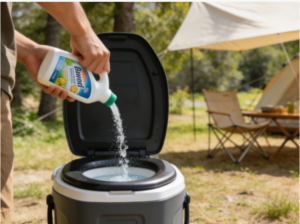
With the growing popularity of outdoor activities such as camping, RV travel, and boating, cleaning mobile toilets has become a key pain point for many outdoor enthusiasts. Unlike household toilets, mobile toilets feature confined spaces and limited ventilation, making them prone to bacterial growth and odor accumulation—issues that not only ruin the user experience but also pose potential health risks. As a targeted solution, mobile toilet cleaners stand out for their portability, powerful cleaning performance, and scene adaptability, becoming an essential item for outdoor trips.
This guide covers core types of mobile toilet cleaners, selection tips, top product recommendations for 2025, and proper usage methods, providing you with a comprehensive cleaning solution to easily tackle mobile toilet hygiene challenges during outdoor activities.
Understanding Mobile Toilet Cleaners – Types and Core Functions
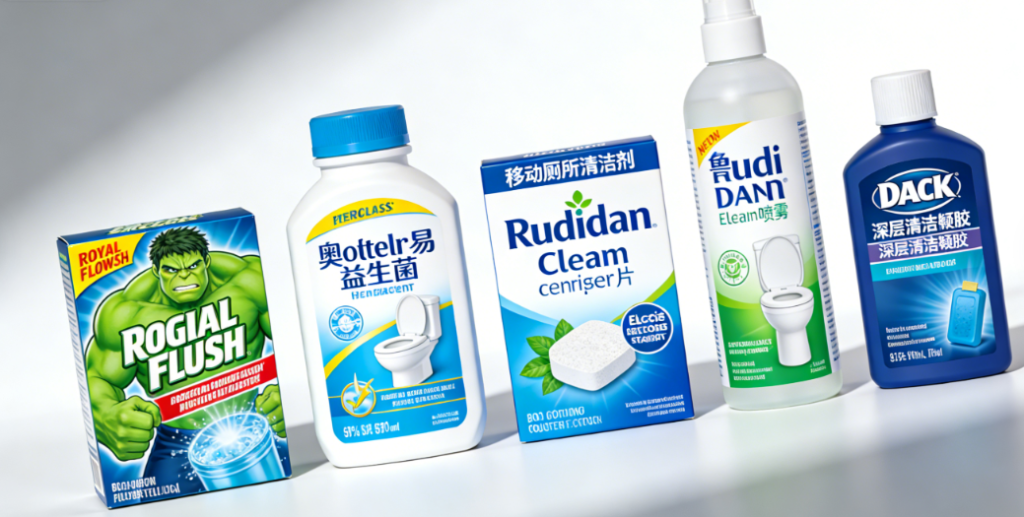
The key differences between mobile toilet cleaners and household toilet cleaners lie in “portability” and “scene adaptability.” They must meet the needs of outdoor storage, small-volume use, and compatibility with various mobile toilet materials (plastic, ceramic, etc.). Based on ingredients and functions, mainstream products can be categorized into 4 types, each suitable for specific scenarios:
1. Liquid/Gel Toilet Cleaners: Top Choice for Powerful Stain Removal
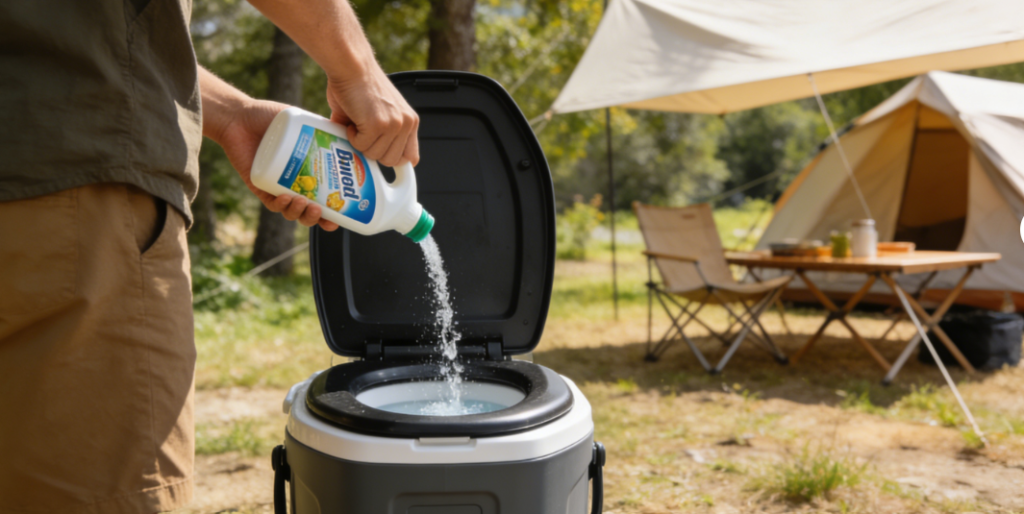
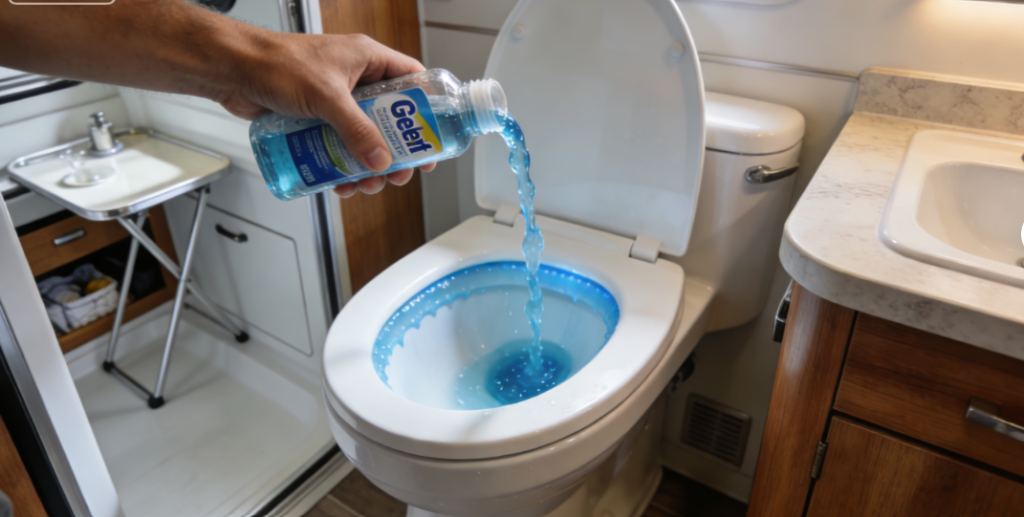
As the most popular option for mobile toilet cleaning, these products primarily contain surfactants, corrosion inhibitors, and mild acidic components (e.g., citric acid, which avoids damaging plastic materials). They quickly dissolve tough stains such as urine scale and fecal residues. Available in liquid and gel forms: gel-based cleaners offer stronger adhesion for thorough cleaning, ideal for high-usage scenarios with heavy stains (e.g., RV toilets, boat toilets); liquid cleaners feature good fluidity and easy application, suitable for quick cleaning during short camping trips.
Core Advantages: Strong cleaning power, fast results; Applicable Scenarios: Regular mobile toilets, RV toilets, boat toilets; Precautions: Avoid direct skin contact; store away from fire sources.
2. 2-in-1 Deodorizing & Disinfecting Products: Core for Odor Control
Tailored to address odors in confined mobile toilet spaces, these products combine cleaning agents with natural deodorizing factors (e.g., plant extracts, activated carbon) and disinfectant ingredients (e.g., quaternary ammonium compounds, mild and non-irritating), achieving “cleaning + deodorization + disinfection” in one step. Some products also include fragrance to improve post-use air quality.
Core Advantages: Outstanding odor control, mild and safe; Applicable Scenarios: Short camping trips, household portable toilets, mobile toilets with poor ventilation; Precautions: Choose fragrance-free options to avoid discomfort for allergy sufferers.
3. Probiotic Cleaners: Eco-Friendly & Long-Lasting Option
As environmentally friendly products, their core component is probiotic bacteria (e.g., Bacillus subtilis), which decompose organic pollutants through microbial action to eliminate odors at the source rather than masking them. These biodegradable products do not pollute the environment or damage mobile toilet septic systems, making them suitable for long-term outdoor use and eco-conscious scenarios.
Core Advantages: Environmentally friendly, no pollution, long-lasting deodorization; Applicable Scenarios: Long-term RV travel, wilderness camping, eco-tourism scenic area mobile toilets; Precautions: Store at room temperature to prevent probiotic inactivation.
How to Choose the Right Mobile Toilet Cleaner? 6 Key Selection Tips
Product selection varies significantly based on usage scenarios and core needs. Master the following 6 tips to accurately match the right mobile toilet cleaner and avoid pitfalls:
1. Prioritize Scene Matching to Precisely Define Needs
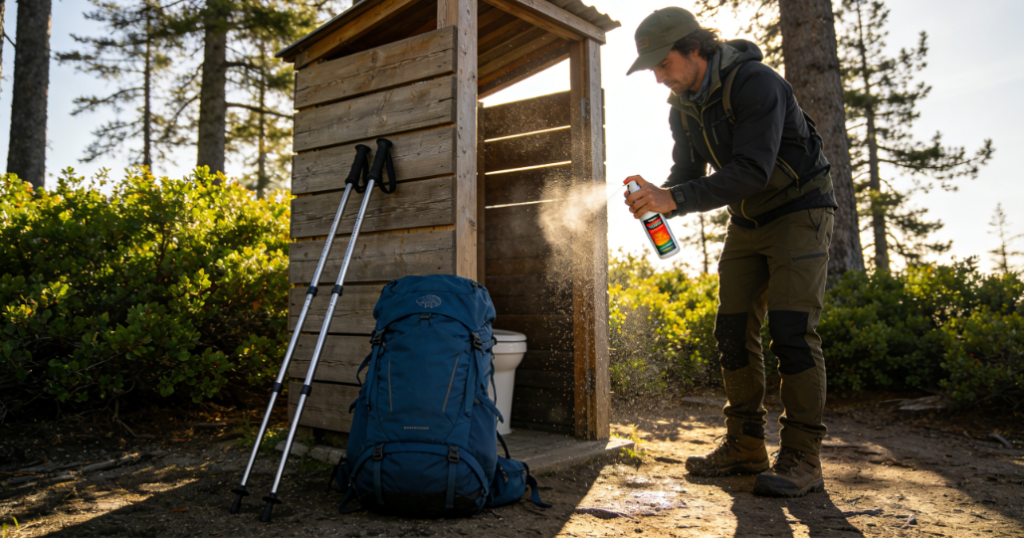
- Short camping trips (1-3 days): Opt for cleaning tablets or spray-type products for portability and light cleaning needs;
- Long-term RV travel/boating: Choose gel-based powerful stain removers or probiotic long-lasting deodorizers, suitable for frequent use and septic systems;
- Household portable toilets: Select 2-in-1 deodorizing and disinfecting products that are mild, safe, and suitable for the elderly and children.
2. Focus on Core Needs to Avoid Functional Redundancy
If the primary issue is “odor,” there’s no need to pursue extreme stain removal—prioritize 2-in-1 products with high deodorant content and positive user reviews. For “tough stains,” choose liquid/gel-based powerful cleaners, checking the surfactant content (≥15% for optimal efficiency). For eco-friendly needs, directly select probiotic or biodegradable products.
3. Pay Attention to Ingredient Safety to Avoid Equipment and Health Damage
Most mobile toilets are made of plastic, so avoid products containing strong acids or alkalis (e.g., hydrochloric acid, sodium hydroxide), which can corrode plastic and shorten equipment lifespan. Additionally, prioritize phosphorus-free, heavy metal-free, and non-irritating products—especially for confined spaces—to reduce respiratory irritation risks. Always check the product’s Material Safety Data Sheet (MSDS) to confirm ingredient safety before purchasing.
4. Consider Storage and Portability to Adapt to Outdoor Environments
Outdoor storage conditions are limited, so choose products with secure packaging and temperature resistance (e.g., labeled “-10℃~50℃ storage compatible”) to prevent leakage or expiration under extreme temperatures. Select capacities based on travel methods: 1-gallon large-capacity options (cost-effective) for RV road trips, and small-capacity sprays or cleaning tablets (≤100ml) for hiking and camping.
5. Reference User Reviews to Focus on Real Experiences
Before purchasing, check user reviews on e-commerce platforms, focusing on three key aspects: “odor control effectiveness,” “cleaning power,” and “ease of use.” Prioritize products with a large number of reviews and a positive rating of ≥95% to avoid obscure, untested products. Additionally, user reviews and recommendations on outdoor gear forums (e.g., Mafengwo, Camping World) are highly reliable.
6. Compare Cost-Effectiveness to Balance Performance and Cost
Cost-effectiveness depends not only on unit price but also on per-use cost. For example, concentrated cleaning tablets (1 tablet dissolves in 5L of water) may have a higher unit price but only cost $0.15 per use. Large-capacity liquid products offer lower unit prices but are less portable, suitable for fixed scenarios. For long-term use, concentrated products are recommended; for short-term emergencies, regular small-capacity options strike a balance between performance and cost.
Proper Usage and Maintenance Guide for Mobile Toilet Cleaners
Choosing the right product is only half the battle—proper usage enhances cleaning effectiveness and extends mobile toilet lifespan. Below are general usage steps and scenario-specific maintenance tips:
I. General Usage Steps (Applicable to Most Products)
- Preprocessing: First, empty the mobile toilet’s waste tank and rinse the inner liner with clean water to remove surface debris;
- Product Application: Follow product-specific instructions—
- Liquid/Gel: Pour or apply the recommended dosage to the inner liner, focusing on heavily stained areas;
- Cleaning Tablets: Add an appropriate amount of water to dissolve the tablet and soak the inner liner;
- Spray: Uniformly spray the product inside the liner and surrounding space;
- Settling Time: Different products require different settling periods—5-10 minutes for liquid/gel, 10-15 minutes for probiotic products—to ensure full activation of ingredients;
- Cleaning and Rinsing: Gently scrub the inner liner with a dedicated brush (repeatedly wipe tough stains), then rinse thoroughly with clean water to remove residues;
- Post-Maintenance: After rinsing, add a small amount of deodorizer (e.g., dissolved probiotic cleaning tablets) and close the waste tank lid tightly, keeping the space dry and ventilated.
II. Scenario-Specific Maintenance Tips
- Short Camping Trips (1-3 days): Perform quick cleaning with spray-type products after each use; conduct deep cleaning with powerful stain removers and empty the waste tank at the end of the trip;
- Long-Term RV Travel: Conduct deep cleaning once a week (using gel-based powerful products); add a small amount of probiotic cleaning solution after daily use to maintain septic system stability;
- Boat Toilets: Due to the humid marine environment, wipe the inner liner with a dry cloth after cleaning to prevent mold growth; choose salt-spray corrosion-resistant products.
III. Important Precautions
- Never mix different types of cleaners, especially chlorine-based and acidic cleaners—this produces toxic gases harmful to health;
- Wear disposable gloves during use and keep the space ventilated to avoid direct skin contact and inhalation of irritating odors;
- Store in a cool, dry place away from children and pets, avoiding exposure to high temperatures and severe impacts;
- In case of skin contact, rinse immediately with plenty of water; if accidentally ingested, induce vomiting and seek medical attention promptly.
Frequently Asked Questions (FAQ)
Q1: Can mobile toilet cleaners be used for regular household toilets?
A: Most can. However, concentrated products (e.g., cleaning tablets, concentrated liquids) must be diluted according to ratios to avoid damaging household toilet glaze. Probiotic and 2-in-1 deodorizing/disinfecting products can be used directly for household toilet cleaning.
Q2: Is the effectiveness of probiotic cleaners inferior to chemical cleaners?
A: Not necessarily. They employ different cleaning mechanisms: chemical cleaners focus on “instant dissolution” for fast results, while probiotic cleaners rely on “microbial decomposition” for long-lasting cleaning and deodorization with environmental benefits. Choose chemical cleaners for short-term emergencies and probiotic cleaners for long-term use or eco-friendly needs.
Conclusion
The cleaning experience of mobile toilets directly impacts outdoor travel comfort. Selecting a mobile toilet cleaner that matches your scenario and core needs effectively resolves odor and bacterial issues. Whether for short camping trips or long-term RV travel, following the principles of “scene matching, ingredient safety, and proper usage” ensures you find the perfect product.If you have any further questions, please consult us immediately!